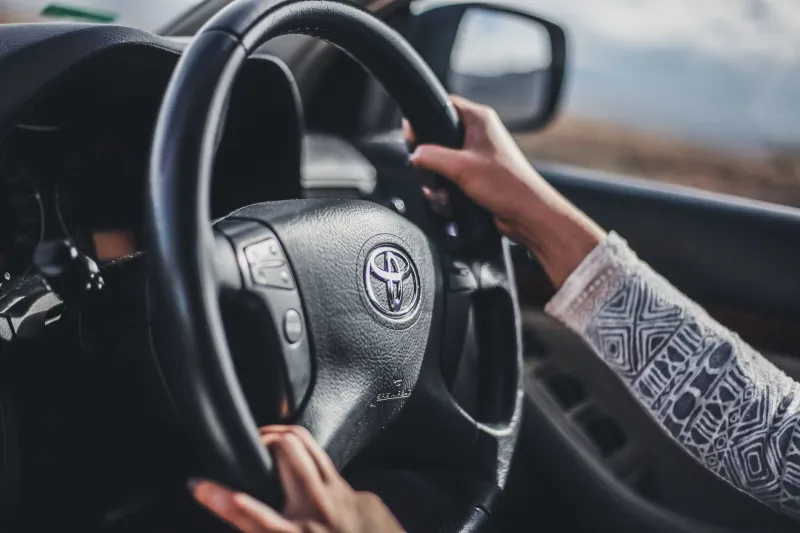
Breathe It In: The Invisible Bond Between Drivers and Their Cars
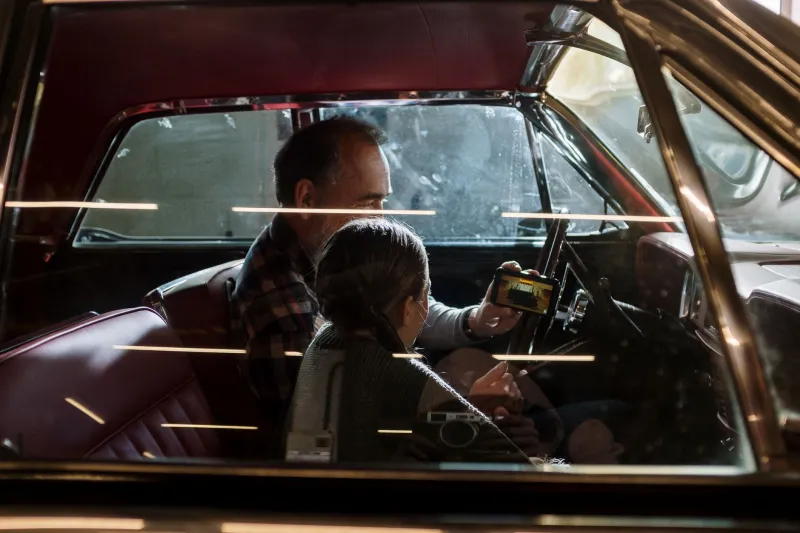
Close your eyes for a second. Picture the car you loved most in your life — not necessarily the fastest or the flashiest, just the one that meant something. Now tell me: what did it smell like?
Bet you didn't hesitate.
Maybe it was sun-warmed vinyl on a summer afternoon. Old coffee and a hint of motor oil. Your grandmother's perfume absorbed into the headliner over a decade of Sunday drives. Whatever it was, it came back fast — faster, probably, than any visual memory could. That's not an accident. That's your brain doing exactly what it was designed to do.
We spend a lot of time talking about what our cars look like. Horsepower, paint color, chrome trim. But the relationship most of us actually have with our vehicles? It lives somewhere deeper than our eyes can reach.
The Science of Why Your Car Smells Like Home
The olfactory system is the oldest sensory pathway in the human brain. Unlike sight or sound, scent signals travel directly to the limbic system — the part of your brain that processes emotion and long-term memory — without stopping at the thalamus first. In plain terms: smells bypass the thinking brain and go straight for the feeling brain.
Dr. Rachel Herz, a neuroscientist who has studied olfactory memory extensively, has described the connection between scent and emotion as the most powerful of any sensory pairing. It's why a single whiff of something can drop you into a memory so vivid it almost feels physical.
Now put that inside a car — a sealed, climate-controlled environment you return to every single day — and you've got a recipe for one of the most intimate sensory experiences in modern American life.
"My truck smells like sawdust and the pine tree air freshener I've been buying for fifteen years," says Marcus T., a contractor from Knoxville, Tennessee, who's owned his 2003 F-150 for over two decades. "My son grew up riding in that truck. When he came home from college last Thanksgiving and climbed in, he just kind of stopped and said, 'It still smells the same.' That hit me harder than I expected."
The New Car Smell Myth (And the Real Story Behind It)
Everyone knows new car smell. It's been bottled, replicated, and sold in aerosol cans at gas stations across the country. But what most people don't realize is that what they're actually inhaling is a cocktail of volatile organic compounds — off-gassing adhesives, plasticizers, and treated fabrics baking under dealership lights.
It's not exactly a bouquet of wildflowers. And yet, it hits like one.
The reason isn't the chemicals themselves. It's the associations we've built around them. New car smell means possibility. It means you made it, at least enough to drive something fresh off the lot. It means the road ahead is unwritten. For a lot of Americans, that scent is tied to some of the biggest moments of their lives — first jobs, new cities, fresh starts.
Caroline R., a real estate agent in Phoenix, remembers the exact smell of the Pontiac Sunfire she bought herself at 24 with her first real commission check. "I'd sit in it in parking lots just to feel what it felt like to own something that was completely mine," she says. "I haven't smelled anything exactly like it since, but every time I get into a new car at a dealership, I'm kind of chasing it."
Why We Keep Cars That Don't Make Sense Anymore
Here's something no financial advisor will ever tell you: sometimes people keep old cars because they can't bear to lose the smell.
It sounds irrational. But spend some time talking to collectors and long-term owners, and a pattern emerges. The car doesn't run great. The repairs are piling up. Practically speaking, it should've been sold years ago. But every time the owner opens the door and that specific, unrepeatable scent hits them — old leather, faint exhaust, a particular mustiness that belongs to that car and that car alone — they just can't do it.
Dave K., a retired firefighter from outside Chicago, has kept a 1978 Chevy Malibu in his garage for thirty-one years. It runs maybe four months out of the year. "That car smells like the summer I met my wife," he says simply. "What am I supposed to do with that?"
The psychology here isn't complicated, even if the emotion is. Scent is one of the few things that can make the past feel genuinely present. Not remembered — present. And for people who've lost someone, or who are navigating a life that looks very different from the one they planned, a car that still smells like then can be a quiet, powerful anchor.
The Collector's Nose
Among serious automotive collectors, scent authenticity has become its own underground currency. Original interiors are prized not just for their visual integrity but for what they still carry aromatically. A barn-find muscle car with untouched upholstery doesn't just look original — it smells original, and that matters to a certain kind of buyer in a way that's hard to explain to anyone outside the community.
"You restore everything perfectly, repaint it, re-chrome it, and it looks exactly right," says Tom V., a vintage car dealer based in central Pennsylvania. "But the smell is gone. New materials, new adhesives. And some buyers, they'll walk up, open the door, take a breath, and you can see their face fall a little. They wanted the whole thing."
This isn't sentimentality for its own sake. It's recognition that a car is more than the sum of its mechanical parts. It's a time capsule. And the olfactory record is often the most honest one.
Learning to Pay Attention
Most of us have been conditioned to evaluate our cars visually. We notice paint scratches. We notice worn trim. We compare what's in our driveway to what's rolling past on the highway.
But when you start paying attention to what your car smells like — really paying attention — something shifts. You start to understand the relationship differently. The morning smell of a cold engine warming up. The way a hot day bakes a particular scent out of the dashboard. The faint traces of every road trip, every passenger, every season.
Your car is holding onto all of it, even when you're not.
That old Malibu in Dave's garage, the Sunfire Caroline can't stop chasing, Marcus's F-150 that still smells like fifteen years of Saturday mornings — these aren't just vehicles. They're sensory archives. And the fact that we can't always explain why we love them the way we do doesn't make the feeling any less real.
Maybe the most honest answer to the question this site asks — what drives you? — isn't horsepower or nostalgia or freedom.
Maybe sometimes, it's just a smell you're not ready to say goodbye to.