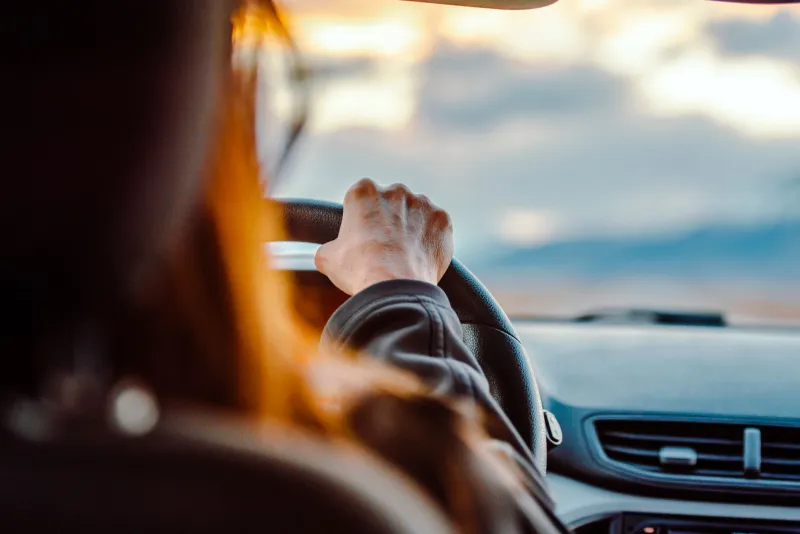
When the World Goes Quiet: The Drivers Who Live for 3 AM and the Roads Only They Know
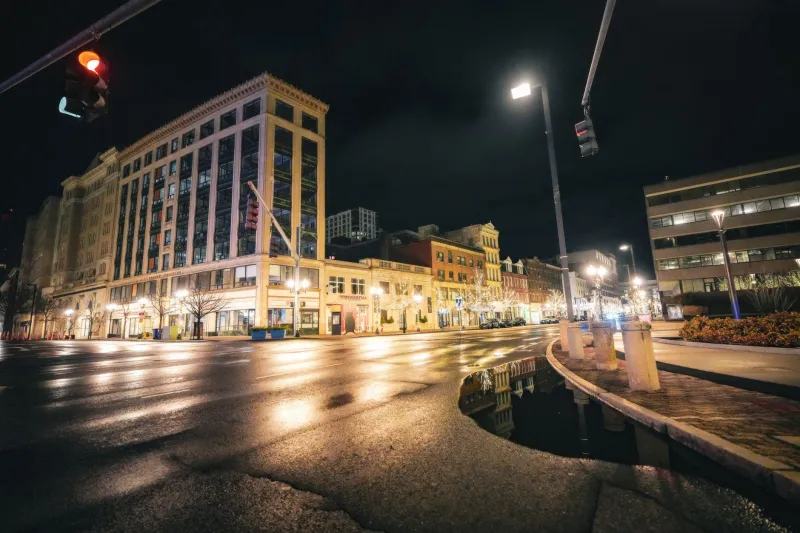
Most of us experience the road as a shared space — a crowded, honking, brake-light-blinking negotiation between strangers. But somewhere around 2:30 in the morning, something shifts. The lanes empty out. The traffic signals blink yellow instead of cycling through their usual commands. The city, or the suburb, or the stretch of interstate you've driven a thousand times, starts to feel like it was built just for you.
A quiet but passionate group of American drivers knows this feeling well. They're not all insomniacs. They're not all night-shift workers punching out after a long haul. Some of them are just people who discovered, almost by accident, that the deepest hours of the night hand you something the daylight hours simply can't — a version of yourself that's harder to access when the world is watching.
Finding the Frequency
Tamara, a graphic designer from outside Nashville, started her late-night drives during a stretch of sleeplessness a few years back. She'd lie in bed, mind spinning, and eventually give up and grab her keys.
"The first few times, I thought I was just killing time," she says. "But then I started noticing things. The way the streetlights hit the wet pavement. How empty the interstate looked. I'd get home an hour later and my brain had actually settled. I started looking forward to it."
What began as a coping mechanism became a ritual. Now she drives deliberately — not because sleep won't come, but because she's chasing something the daytime can't replicate. She calls it "finding the frequency," that particular mental state where creative ideas surface without being crowded out by noise and obligation.
She's not alone in this. Talk to enough late-night drivers and a pattern emerges: the darkness isn't a backdrop. It's an active ingredient.
The Road as Reset Button
Marcus works the overnight shift at a distribution center outside Columbus, Ohio. His commute home — a 34-minute run down mostly empty state routes — has become the most important part of his day.
"People think the night shift wears you down, and yeah, physically it does," he admits. "But that drive home at 6 AM, when the sun's just starting to show? That's mine. The radio's low, nobody's cutting me off. I get to decompress before I walk in the door and have to be a dad and a husband. Without that drive, I think I'd bring all that work energy into the house."
For Marcus, the drive isn't about discovery so much as transition — a pressurized airlock between two very different versions of his life. The road gives him the seam he needs.
That idea of transition shows up constantly in conversations with after-hours drivers. The car, in the middle of the night, becomes a space outside of time. You're not at work. You're not home. You're somewhere in between, and for a lot of people, that in-between is where the real thinking happens.
What Silence Actually Sounds Like
There's a practical element to all of this, too. Daytime driving is cognitively expensive. You're tracking other cars, watching for pedestrians, reacting to merge lanes and construction zones and the guy in the pickup who clearly has somewhere very important to be. At 3 AM, that cognitive load drops dramatically. Your brain gets some of its RAM back.
Drivers who've made a habit of late-night runs often describe a particular kind of mental clarity that sets in around the 20-minute mark — a state that feels less like distraction and more like focus, even though nothing specific is demanding their attention.
Derek, a high school history teacher from Albuquerque, started taking solo night drives after his divorce. He'd head out toward the desert, windows down, no destination.
"I worked through more stuff on those drives than I ever did sitting still," he says. "There's something about moving through dark space with nothing coming at you. Your thoughts slow down to a speed where you can actually look at them."
He laughs a little. "My therapist thought I was nuts. But then she started asking me what I'd figured out on my drives, because that's where the real breakthroughs were happening."
The Culture Nobody Talks About
Search the right corners of the internet and you'll find communities built around this exact experience — forums, subreddits, Discord servers where people share their late-night routes, their playlists, their 3 AM observations. There's a whole aesthetic around it: lo-fi music, city lights reflected in rain-slicked streets, dashcam footage of empty highways stretching into the dark.
But the drivers themselves tend to be private about it in real life. There's something almost sacred about the practice, and talking about it too loudly feels like it might break the spell.
"People ask me what I do when I can't sleep and I just say I drive," says Tamara. "If I get into the why, it sounds weird. But it's not weird. It's the most honest thing I do."
That honesty is the thread connecting all of these stories. In a culture that rewards productivity and presence and constant connection, choosing to disappear into the dark at 2 in the morning is a quiet act of rebellion. You're not optimizing anything. You're not networking or scrolling or knocking items off a list. You're just moving through space, alone, with your own thoughts for company.
What the Night Gives Back
Not everyone who tries it sticks with it. Some people find the quiet unsettling rather than liberating. But for those who do connect with it, the late-night drive tends to become non-negotiable — a practice they protect the way other people protect their morning workouts or their Sunday afternoon rituals.
Marcus puts it simply: "The road at 3 AM is honest. There's no performance. It's just you and the pavement and wherever your head wants to go."
Maybe that's the real answer to what drives people out into the dark. Not insomnia, not necessity, not even a love of cars in the traditional sense. It's the hunger for a version of themselves that only shows up when the rest of the world isn't watching — when the exits blur past and the radio plays something that hits different at this hour, and for a little while, the only thing that matters is the road ahead.
Some of the best thinking happens in the dark. Ask anyone who's been out there.