Grease Under the Fingernails: The Quiet Joy of Falling in Love With the Work Itself
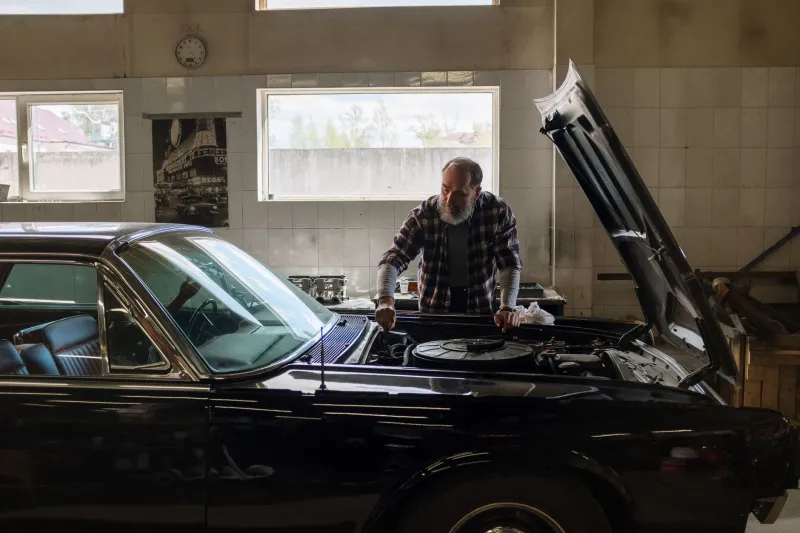
Most people think about cars the way they think about airplanes — as a means of getting somewhere. Point A, point B. The romance is in the destination, or maybe in the blur of scenery at highway speed. But spend enough time around garages and you'll meet a different breed entirely. People who, given the choice between a Sunday drive and a Sunday elbow-deep in a carburetor, would choose the carburetor every single time.
These are the fixers. And what drives them isn't the road at all.
When the Wrench Becomes the Point
Marco Delgado has been turning wrenches since he was eleven years old, watching his uncle rebuild a '72 Chevy pickup in a San Antonio driveway every weekend for three summers straight. Today, at 38, he runs his own independent shop in Austin and still spends most Saturday mornings working on a '68 Mustang fastback he picked up for next to nothing at an estate sale.
"People ask me if I'm going to drive it when it's done," he says, laughing a little. "I probably will. But that's not really why I'm doing it."
What he's doing, by his own description, is thinking. The Mustang is where he processes a difficult week, works through an argument he had with his brother, or just clears his head when the noise of everyday life gets too loud. "There's a problem in front of you, and it has a solution," he explains. "You find it. You fix it. The car doesn't lie to you."
That clarity — the honest, mechanical logic of a broken thing waiting to be made whole — is something that comes up again and again when you talk to people who've fallen hard for the craft of automotive repair.
The Psychology of the Fix
There's actually a well-documented phenomenon at play here. Psychologists who study flow states — those periods of deep, almost effortless concentration — note that skilled manual work is one of the most reliable ways to achieve them. The task has to be complex enough to demand your full attention but structured enough that progress is measurable. Diagnosing a misfire, rebuilding a brake caliper, chasing an electrical gremlin through a 40-year-old wiring harness: these aren't mindless tasks. They require focus, patience, and a kind of detective's intuition.
For a lot of people, that combination is genuinely therapeutic in a way that's hard to replicate elsewhere.
Jessica Tran discovered this almost by accident. A software engineer in the Seattle area, she bought a beat-up 1993 Toyota pickup two years ago with the vague intention of having it "fixed up." A YouTube rabbit hole later, she was doing the work herself. "I spend all day in my head, solving abstract problems," she says. "Working on the truck is different. I can see what I did. I can touch it. When I'm done, something that wasn't working is working. That feedback loop is incredible."
She's now on her second project — a 1980s-era Land Cruiser she found listed on Facebook Marketplace — and has no plans to slow down.
A Second Chance in a Set of Overalls
For others, the garage represents something more personal than a hobby. It's a reset.
Darius Webb spent most of his twenties bouncing between jobs and struggling to find his footing after leaving the Army. He stumbled into automotive work through a vocational training program in Memphis and found, somewhat to his own surprise, that he was good at it. More than good — he was obsessed.
"I didn't have a lot of things I felt confident about back then," he says. "But I could walk into any shop, look at a problem, and figure it out. That meant something to me."
He eventually earned his ASE certifications and now teaches automotive technology at a community college, where he sees the same transformation happen to students every semester. "I watch kids come in who've been told they're not smart, they're not going anywhere," he says. "And then something clicks. They fix something. And they realize — wait, I can do this. I'm good at this. That changes a person."
The car, in this context, becomes a kind of mirror. It reflects back a version of yourself you might not have known existed.
The Garage as Sacred Space
Ask almost anyone who wrenches seriously about their garage, and the language they use starts to sound almost spiritual. It's their place. Their hours. The one part of the week that belongs entirely to them.
Marco puts it simply: "My phone doesn't matter out there. My inbox doesn't matter. It's just me and the car and the problem in front of me. I don't have a lot of places like that in my life."
Jessica describes the smell of motor oil and metal as genuinely comforting at this point — a Pavlovian trigger for the relaxed focus she's come to associate with her garage time. "My husband thinks it's funny," she admits. "But he's also noticed that I come back inside in a better mood almost every time."
There's a reason the phrase "shop therapy" has become a genuine part of the automotive enthusiast's vocabulary. It's not entirely a joke.
What It Really Means to Be a Car Person
The culture around cars has always celebrated the driver — the one behind the wheel, hair in the wind, chasing the horizon. And there's nothing wrong with that. But the people who build, restore, and repair those cars often have a relationship with them that runs even deeper.
They know what's underneath. They understand the machine at a level most drivers never will. And in that understanding, they find something that's harder to come by than a fast car or a scenic route.
They find purpose.
Maybe that's the most honest answer to the question this site keeps asking. For some people, what drives them isn't speed or freedom or the open road. It's a creeper, a floor jack, and the quiet satisfaction of making something work again.
That's enough. That's everything.