The Long Way Home: How Americans Are Reclaiming Their Commute
Let's be honest about something. The commute has always gotten a bad rap.
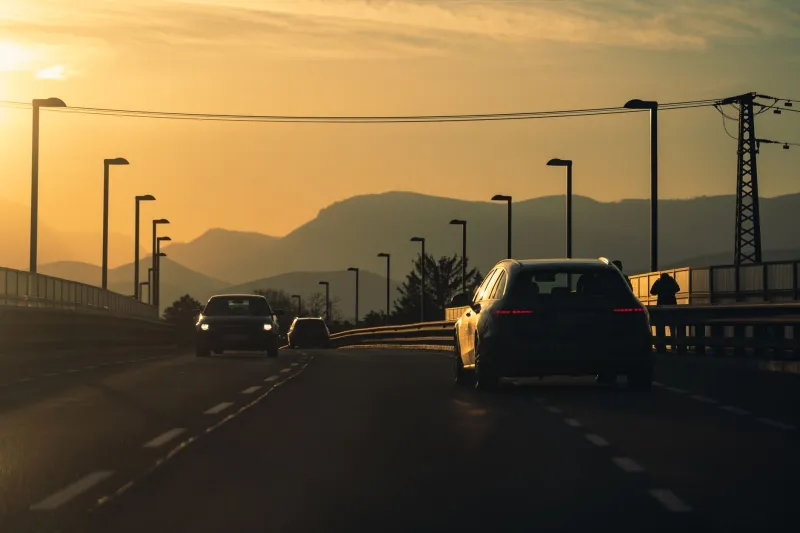
It's the butt of the joke in every office sitcom. The thing people complain about at parties. The lost hours you're supposed to resent. According to the U.S. Census Bureau, the average American spends about 27 minutes each way getting to work — nearly an hour a day, over 200 hours a year, just sitting in traffic or crawling down a highway that seems to have more brake lights than pavement.
And yet, talk to enough drivers, and a different story starts to emerge.
The Car as the Last Private Space
Somewhere between the morning alarm and the first meeting, there's a window. A stretch of time that belongs — at least theoretically — to you alone. No one's asking you for anything. Your kids aren't in the backseat (most days). Your boss can't see you. The texts can wait.
For a lot of Americans, that window is the commute. And once you start thinking about it that way, it changes everything.
"My car is the only place in my day where I'm not performing for anyone," says Renee Caldwell, a middle school teacher who drives 40 minutes each way from her home outside of Columbus, Ohio. "At school I'm 'on' the whole time. At home I'm a mom. In the car, I'm just me. I didn't realize how much I needed that until I started working from home during the pandemic and suddenly I didn't have it anymore."
She's not alone in that observation. When remote work stripped the commute away for millions of people, many expected to feel relieved. Some did. But a surprising number found themselves oddly out of sorts — missing, of all things, the drive.
Curating the Soundtrack of Your Life
Ask people what they do during their commute and the answers are as varied as the drivers themselves. But music comes up constantly, and the way people talk about their driving playlists suggests something more intentional than background noise.
Derek Osei, an accountant in Atlanta who navigates some of the country's most notorious traffic on I-285, has a different playlist for every mood and every type of day. Monday morning gets something energizing — old-school hip-hop, usually. Friday afternoons get whatever he feels like, which he describes as "the musical equivalent of taking your tie off."
"I've been doing this long enough that certain songs are just permanently tied to certain stretches of road," he says. "It sounds weird, but my commute has a soundtrack. It's mine. Nobody else has heard it quite the way I have."
That kind of intentional curation — treating the commute as a listening experience worth designing — has grown alongside the explosion of streaming music and podcasts. Spotify reported that "driving" playlists consistently rank among its most-saved categories. Apple Podcasts has noted that the commute window remains one of the most reliable listening slots in the day, even as podcast consumption has spread to other contexts.
Learning Something New at 65 Miles Per Hour
For others, the commute has become an unlikely classroom.
Lori Hutchins, a nurse practitioner in the Phoenix metro area, has listened to over 200 podcast episodes in the past two years during her daily 35-minute drive. She's worked her way through series on history, economics, true crime, and — most recently — a podcast about the history of American road culture that she describes as "accidentally perfect for driving."
"I'm not a big reader. I never have been," she admits. "But I've learned so much just from my commute. My coworkers think I'm well-read. I'm like, no — I just have a long drive."
This is one of the quiet revolutions happening inside American cars. The audiobook market has grown steadily for years, and industry analysts consistently point to commuters as the core audience. For people who feel like they never have enough time, the drive has become a way to reclaim an hour that used to feel like dead air.
The Meditative Mile
Not everyone fills the silence. Some people are learning to sit in it.
Tomás Rivera drives a stretch of rural highway in central Texas every morning, a route that takes him past grazing cattle, mesquite trees, and the kind of wide-open sky that makes you feel small in a good way. He tried podcasts for a while. He tried audiobooks. Eventually, he turned everything off.
"I just drive," he says. "I look at the road. I think about things, or I don't think about anything. I get to work and I feel like I've had some time to myself before the day starts. It's the only part of my routine that feels like mine."
There's research to support what Tomás has stumbled into intuitively. Studies on mindfulness and mental health consistently find that unstructured, low-demand time — time when the brain isn't being fed stimulation — plays an important role in emotional regulation and creative thinking. The commute, stripped of its reputation as wasted time, starts to look a lot like an opportunity.
Reframing the Road
None of this is to romanticize gridlock or pretend that a two-hour slog on the 405 is a wellness retreat. Traffic is real. Frustration is real. The commute can absolutely be miserable, and systemic improvements to public transit and urban planning matter.
But within the reality most American drivers are living with right now, there's a choice about how to inhabit those miles. And a growing number of people are making that choice consciously — deciding that the drive isn't something to endure but something to use.
Renee, the Columbus teacher, puts it as well as anyone. "I used to count down the minutes until I got home," she says. "Now I sometimes take the long way. Not every day. But sometimes I'm just not ready for the day to start, or I'm not ready for it to end. The car lets me stay in between for a little while longer."
In between. That's actually a pretty good description of what the commute offers, when you let it. Not the destination, not the departure — just the moving, breathing, private middle ground where you get to be yourself for a little while before the world asks something of you again.
Maybe that's worth more than we've been giving it credit for.