Every Car You've Ever Owned Is a Chapter: Reading the Story in Your Garage
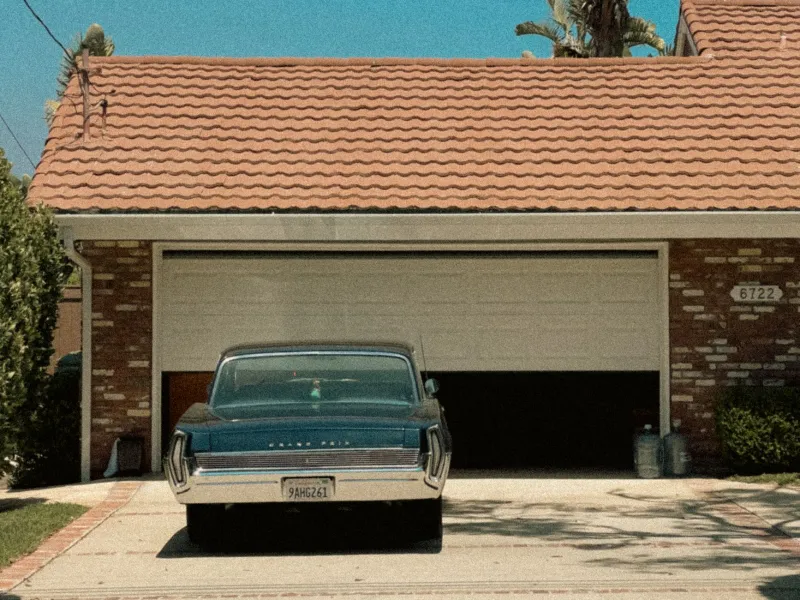
Open any storage unit, peek into any two-car garage that's actually holding two cars, and you'll find the same thing: evidence. Bumper stickers from places that meant something once. A child seat base that never got returned. A set of snow chains bought in a panic before a mountain trip. A crack in the windshield nobody ever got around to fixing because, honestly, it didn't seem worth it.
Cars accumulate life the way people do — in layers, quietly, until one day you look at what you're driving and realize it's not quite you anymore. Or maybe it's more you than anything else in your driveway.
The vehicles we choose are rarely just practical decisions. They're confessions.
The First Car: Loud, Wrong, and Completely Perfect
Ask almost anyone about their first car and watch what happens to their face. There's a particular kind of smile that shows up — part pride, part embarrassment, all affection.
For Denise Morales, a 41-year-old teacher from Albuquerque, it was a 1993 Honda Civic hatchback in a shade of green that she describes as "pond algae, basically." It had 140,000 miles when she bought it for $1,800 at 17. The passenger window didn't roll down. The air conditioning had given up. She loved it with her whole heart.
"That car was freedom," she says. "Not good freedom. Chaotic freedom. I could go anywhere and nobody could stop me. Even if 'anywhere' was just the Walmart parking lot at midnight."
The first car rarely makes sense on paper. It's usually underpowered, overpriced for what it is, and held together by optimism and deferred maintenance. But it's the first time a machine has ever been yours, and that changes how you see everything. You learn to drive in it, obviously. But you also learn something about yourself — that you can figure things out, that independence has a cost (usually around $300 in alternator repairs), and that some problems are worth solving just to keep going.
First cars are declarations of personhood. The fact that they're usually kind of terrible is almost beside the point.
The Practical Chapter Nobody Warned You About
And then, somewhere in your late twenties or thirties, something shifts.
Maybe it's a baby. Maybe it's a longer commute. Maybe it's just the slow realization that you've been sitting in the parking lot of a Home Depot for twenty minutes because you can't fit a single sheet of plywood in your coupe. Whatever the trigger, a lot of Americans end up in what you might call the Responsible Vehicle Era.
The minivan. The midsize SUV. The pickup truck that's actually used as a truck. These vehicles are often purchased with a kind of cheerful resignation — this is what this phase of life looks like — and they do their jobs. They do their jobs extremely well, actually. They haul kids and groceries and camping gear and dog crates. They are, by almost every measurable standard, better vehicles than the thing they replaced.
But they're not always you.
Jeff Harrington, a 48-year-old contractor from Columbus, Ohio, drove a Toyota Sienna for nine years. He doesn't regret it. "That van went to every soccer game, every camping trip, two cross-country drives. It was a great van." He pauses. "I just never once felt like myself getting into it."
That quiet disconnect — between the life the car serves and the person sitting behind the wheel — is something a lot of drivers carry around without naming it. The practical car isn't a failure. It's just a chapter. And chapters, by definition, eventually end.
The Passion Project as a Second Chance
Here's where the garage archaeology gets really interesting.
For a certain kind of driver, there comes a moment when the kids are a little older, the mortgage is a little smaller, or the patience for deferred joy simply runs out. And they go looking for something they gave up. A 1969 Camaro in need of everything. A Porsche 944 with a complicated history. A truck their grandfather used to drive, or one that looks enough like it to count.
These aren't midlife crisis purchases, despite what the clichés suggest. They're more like returning a phone call you let go to voicemail for fifteen years.
Sandra Park, a 52-year-old accountant from Nashville, bought a rusted 1971 Ford Bronco three years ago. Her husband thought she'd lost her mind. She spent eighteen months and more money than she'll specify restoring it with the help of a local shop and a lot of YouTube tutorials. It now lives in her garage under a cover, and she drives it every weekend, weather permitting.
"I had this Bronco poster on my wall when I was twelve," she says. "I don't know why. I just thought it was the coolest thing. And then life happened, and I forgot about it for forty years." She laughs. "The car didn't forget about me, apparently."
Passion projects like Sandra's aren't about recapturing youth. They're about finally having the resources, the time, and the self-knowledge to pursue something purely because it matters to you. They're the automotive equivalent of going back to school at 50, or finally taking that trip you kept saying you'd take someday.
What the Next Car Tells You First
There's a theory among people who pay attention to these things: the car you start wanting usually arrives before the life change that makes it make sense. You start researching camper vans six months before you admit you're burned out at work. You start browsing listings for sports cars right around the time you realize the kids don't need you the same way they used to.
The want appears first, like a signal from somewhere ahead on the road.
Pay attention to it. It's telling you something.
Your garage isn't just a place where you park. It's a record of who you've been — the freedom-chasing teenager, the exhausted parent, the person who finally gave themselves permission to want something again. Each vehicle is a chapter with its own voice, its own lessons, its own particular smell when you turn the heat on in October.
And the one you're driving right now? It's still being written.