Floor It or Coast: What the Way You Drive Says About the Way You Live
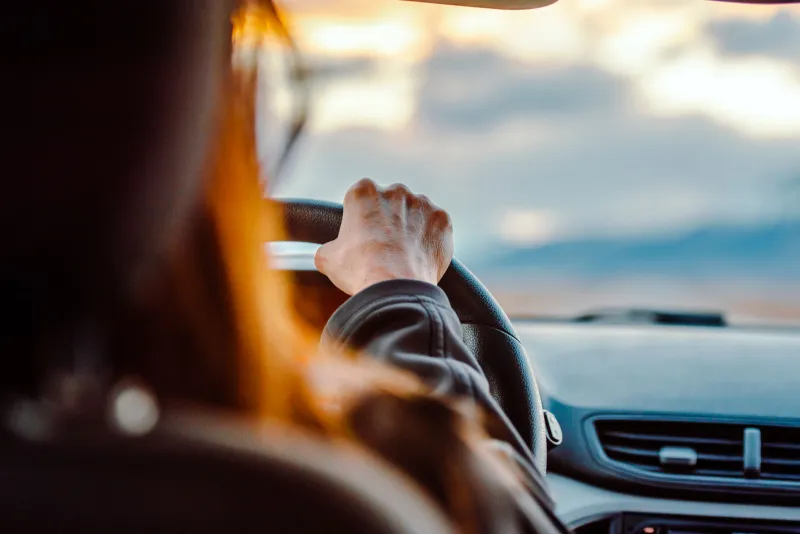
You've probably never thought of your morning commute as a personality test. But somewhere between the on-ramp and that first red light, you're already revealing more about yourself than you would in most job interviews.
Driving is one of the few activities where we operate almost entirely on autopilot — and that's exactly what makes it so telling. When the conscious mind steps back, something more honest takes over.
The Route You Always Take (And Why You Never Question It)
Ask most drivers why they take a particular route to work, and they'll say something like, "It's just faster." But is it really? Transportation researchers have found that drivers frequently overestimate the time savings of their preferred routes and underestimate how much habit — not logic — is steering the wheel.
People who religiously stick to the same roads tend to be comfort-seekers in other areas of life too. They know what they like, they've optimized for consistency, and they're not particularly interested in surprises before 9 a.m. That's not a criticism — it's just data.
On the flip side, the driver who takes a different road home every Thursday "just to see what's out there" is usually the same person who orders something unfamiliar at a restaurant or changes career paths more than once. Novelty-seeking behind the wheel tends to bleed into the rest of life pretty reliably.
Dr. Leon James, a traffic psychology researcher at the University of Hawaii who has spent decades studying driver behavior, has long argued that driving is essentially a social and emotional act disguised as a mechanical one. The road, in his view, is a mirror.
Speed: The Number That Doesn't Lie
Let's talk about how fast you drive — not what you tell your spouse, but what actually happens when the highway opens up.
Consistent speeders — the folks who run 10 to 15 over without a second thought — often describe themselves as "efficient" or "just keeping up with traffic." And sure, sometimes that's true. But research in driver personality profiling links habitual speeding with higher scores in sensation-seeking and lower scores in what psychologists call agreeableness — the tendency to defer to social norms and the needs of others.
That doesn't make speeders bad people. Some of the most generous, warm-hearted folks you'll ever meet have a lead foot. But there's something revealing about a person who consistently decides the posted limit doesn't quite apply to them.
Then there are the slow-lane loyalists. The ones who set cruise control at exactly 67 mph and feel genuinely calm about it. These drivers often report lower stress levels overall and tend to score higher on conscientiousness scales. They planned their departure time. They've got a podcast queued up. They are fine.
Marcus, a 44-year-old contractor from outside Nashville, put it plainly: "I used to drive like I was always late for something. Took me until my late thirties to realize I was never actually late — I just lived at that speed. Slowing down in the car was the first place I slowed down in general."
What You Listen To — And When You Turn It Off
Your audio choices are a whole chapter unto themselves.
Drivers who need music or podcasts playing at all times frequently describe silence as uncomfortable. There's nothing wrong with that — humans are social creatures and sound is a form of company. But it's worth asking: are you filling the car with noise because you enjoy it, or because the quiet asks too many questions?
The drivers who turn everything off on a long stretch of highway — who actually choose the silence — tend to describe those miles as something close to meditation. They're processing. Thinking things through. Using the road the way some people use a journal.
Then there's the volume dial. Clinical psychologist Dr. Carla Marie Manly, who has written extensively on emotional wellness, notes that people who crank music aggressively during stressful drives are often using the car as a pressure valve — a socially acceptable place to feel things they've been managing elsewhere. "The car is private space in a public world," she's said. "People do emotional work there that they won't do anywhere else."
Ever screamed along to a song at a stoplight and felt genuinely better afterward? Yeah. That's the car doing its job.
The Merge and What It Means
Few moments in driving reveal character faster than the merge.
There are drivers who signal early, drift smoothly into the lane, and let someone in without a second thought. There are drivers who treat the zipper merge like a personal affront — I waited in this line, and you think you can just slide in at the front? And there are drivers who panic-brake and wave everyone past them even when they have the right of way.
These aren't random behaviors. They map, with surprising consistency, onto how people handle competition, fairness, and social hierarchy in real life. The aggressive merger who refuses to yield often carries a deep sense of scarcity — a feeling that resources (time, space, opportunity) are limited and must be defended. The person who lets everyone in sometimes struggles with boundaries in other relationships too.
Jamila, a 31-year-old teacher from Atlanta, laughed when she thought about it: "I let everyone merge. Everyone. My therapist would have a field day with that."
Parking Lot Personality
Before you even get on the road, the parking lot is already reading you.
Do you circle for the closest spot, or take the first open space and walk? Do you back in (planners, control-oriented, often engineers or military veterans, statistically speaking) or pull straight in and deal with the exit later? Do you return the shopping cart?
Okay, the cart thing is a whole separate article. But the point stands.
Backers-in tend to think several steps ahead. Pull-straight-in types are often more spontaneous, more present-focused — they'll figure out the exit when they get there. Neither approach is wrong. But both are revealing.
The Honest Odometer
Here's the thing about driving: it strips away the version of yourself you've curated for everyone else. There's no audience in the car. No performance required.
You're not the polished LinkedIn profile or the patient parent at the school pickup line (well, mostly). You're the person who mutters at the slow left-lane driver, who takes the long way home when you need to think, who turns up a song from 2003 because something about today needed it.
That person — the one behind the wheel — is probably closer to the truth than most people get to see.
Maybe that's worth paying attention to. Not to judge yourself, but to know yourself. Because understanding what drives you on the road might just be the first step toward understanding what drives you everywhere else.