Tape Deck Rebels: The Drivers Ditching Streaming for the Warmth of Analog Sound
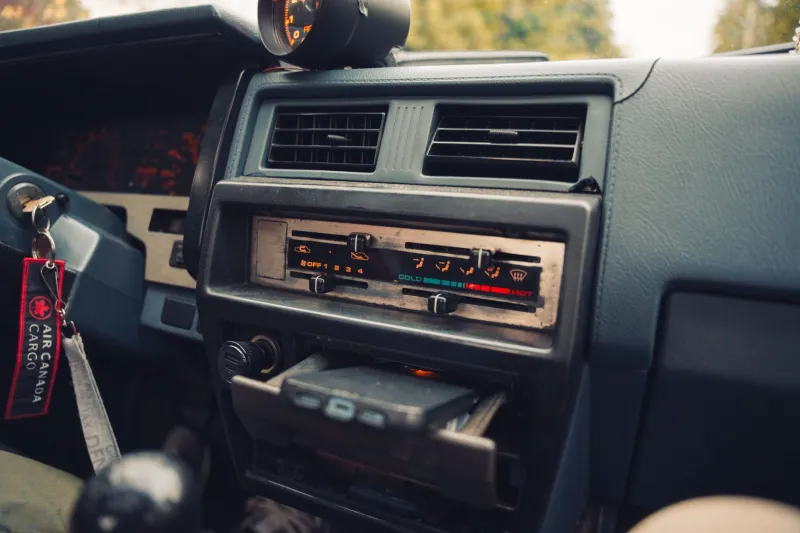
Joel Castillo pulls a cassette tape from a small wooden rack mounted just below his dashboard. The rack holds maybe twenty tapes, each one labeled in his own handwriting. He slides the tape into a Pioneer deck that was manufactured in 1986 and has been lovingly restored to better-than-factory condition. Fleetwood Mac's Tango in the Night crackles to life through a set of custom-built door speakers, and Joel pulls out of his driveway in Portland, Oregon, looking like a man who has absolutely no interest in your Spotify recommendations.
"People ask me why," he says, grinning. "And I tell them: because it sounds alive. Because I had to choose it. Because I can't skip it."
Joel is part of a quietly growing counterculture that's threading its way through garages and car meets from the Pacific Northwest to the Florida panhandle — a community of drivers who are actively, deliberately rejecting the frictionless convenience of digital audio in favor of something older, warmer, and considerably more hands-on.
The Problem With Perfect
Digital audio is, by most technical measurements, superior. It's consistent, portable, lossless at high enough bitrates, and available in quantities no human could ever consume. So why are people tearing it out of their dashboards?
Because perfect, it turns out, can feel hollow.
"Streaming is like eating at a buffet where every dish is fine," says Renata Ochoa, an audio technician and vintage stereo restorer based in Austin, Texas. "Nothing is bad. Nothing is great. You just... consume. There's no relationship with the music."
Renata has built analog systems for close to forty vehicles over the past six years, ranging from a 1972 Chevy C10 pickup with a period-correct eight-track player to a 2019 Subaru Outback retrofitted with a Japanese-market cassette deck and a hand-wound tube amplifier. Her clients aren't exclusively vintage car people. Many of them drive perfectly modern vehicles and simply want something different happening inside them.
"They come to me because they want to feel something," she says. "Not just hear it."
The Craft Behind the Sound
Building an analog audio system for a modern car is not a weekend project. It requires patience, sourcing skills, and a willingness to problem-solve in ways that digital installation never demands.
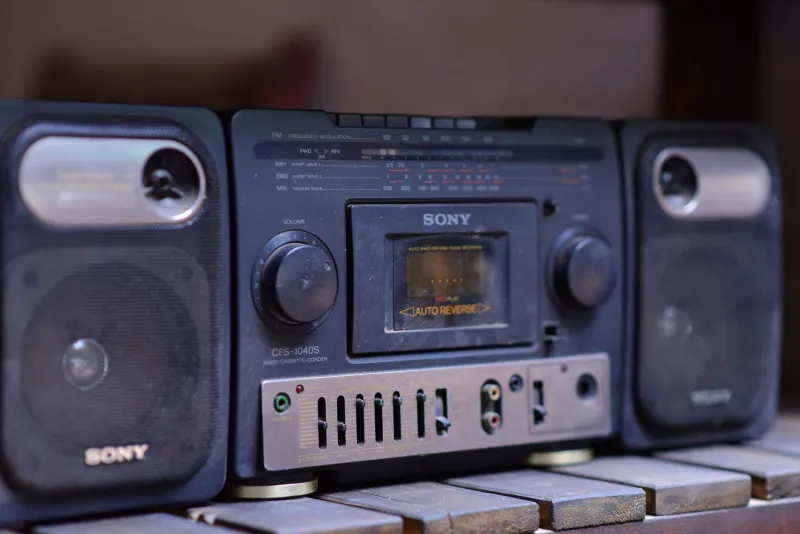
Vintage head units — the cassette decks and eight-tracks that serve as the centerpiece of these builds — need to be located, tested, and often rebuilt. Capacitors fail. Belts stretch and snap. Heads need cleaning and alignment. Many of the best units are sourced from Japanese domestic market vehicles, where audio culture has always run deep and quality control was exceptional.
From there, the signal chain becomes a series of intentional choices. Some builders route the output through vintage tube amplifiers, prized for the harmonic distortion they introduce — the very "imperfection" that audiophiles describe as warmth. Speakers are often custom-built, with drivers chosen for their tonal character rather than raw output. Cabinet design, crossover tuning, and mounting position become obsessions.
"I spent three weekends getting the speaker angles right in my '98 4Runner," says Damon Price, a mechanical engineer and audio hobbyist in Denver. "Three weekends on angles. But when it was right, I sat in that truck and just listened for an hour. Didn't go anywhere. Just sat there."
That's a sentence worth sitting with. A man. A truck. An hour of stillness. No algorithm required.
Why the Tape Matters as Much as the Deck
There's a ritual element to cassette-based listening that streaming has completely erased, and it turns out a lot of people miss it without having known they did.
You have to choose a tape before you get in the car. You have to flip it at the halfway point. You can't skip tracks without mechanical effort. And if you want to hear a specific song, you rewind — imprecisely, by feel — and try again.
All of this sounds like inconvenience. But for devotees, it's the whole point.
"Choosing a tape is an act of intention," says Joel. "You're committing. You're saying, this is the album for this drive, for this mood, for this moment. And then you live with it. That commitment changes how you listen."
The tactile quality of the medium matters too. Cassettes have weight and texture. The artwork on a J-card is physical, holdable. The slight imperfections in playback speed — what engineers call "wow and flutter" — give the sound a gentle, breathing quality that digital audio actively suppresses.
For many listeners, those imperfections aren't bugs. They're the whole sound.
A Broader Hunger for the Real
The analog car audio revival doesn't exist in isolation. It's part of a broader cultural current that's been building for years — the vinyl resurgence, the return of film photography, the craft cocktail movement, the obsession with hand-thrown ceramics. Americans, in increasing numbers, are seeking out experiences that require something of them. That push back. That can't be infinitely replicated.
There's a real argument to be made that digital convenience, taken to its logical extreme, has stripped something meaningful from the act of engaging with art. When any song is available instantly and endlessly, the act of listening becomes weightless. Nothing is chosen. Nothing is savored. The algorithm curates, and you receive.
Vintage audio in a car is the opposite of that. It is, in the most literal sense, what you make of it.
"I think people are starving for something that requires their participation," says Renata. "Music used to be something you had a relationship with. You wore out the tape. You knew exactly where the leader splice was. You associated songs with specific drives, specific feelings. Streaming erased all of that. We're just trying to get it back."
The Community Keeping It Alive
Find the right corners of Instagram or the right car meet on a Saturday morning, and you'll discover that this community is more active and more inventive than you might expect. Builders share sourcing tips for rare Japanese decks. Restorers post step-by-step guides to recapping vintage amplifiers. Someone is always asking for speaker recommendations for a specific cab configuration, and someone else always has an answer.
It's a community defined by generosity and genuine enthusiasm — the kind of enthusiasm that only comes from doing something because you love it, not because it's easy or trendy.
Damon Price summed it up well, parked in his 4Runner with Coltrane playing softly through those carefully angled speakers. "This isn't about being anti-technology," he said. "I work in tech. I love tech. This is about being pro-experience. There's a difference."
He reached down, found the end of the tape, and flipped it over.
The music started again from the beginning. He didn't mind at all.