Four Wheels and No Judgment: The Raw Truths We Only Tell Our Cars
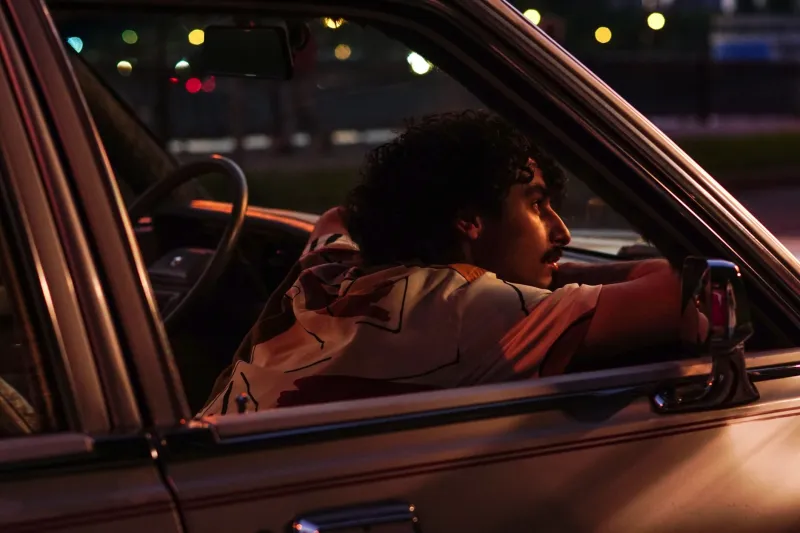
There's a version of you that nobody else gets to see.
Not your partner. Not your best friend. Not your therapist, if you have one. This version shows up after a brutal meeting when you're still in the parking garage. It surfaces on a Tuesday night when you're sitting in your driveway, engine off, not quite ready to walk through the front door and become whoever everyone needs you to be.
Your car knows that version of you better than anyone.
And somehow — despite the cracked leather, the french fry smell from 2019, and the check engine light you've been ignoring since March — it never says a word.
The Argument You Already Won
Ask almost any driver and they'll admit to it: the rehearsal fight. The one where you're alone on I-95 or crawling through suburban traffic, and you're saying out loud — actually out loud — exactly what you should have said two hours ago. Or two years ago.
Marcos, a 41-year-old contractor from outside Atlanta, laughed when he described his version of it. "I've had full-on screaming matches in my truck," he said. "Like, I'm gesturing, I'm raising my voice. I've probably scared people at stoplights. But man, I always feel better after."
There's something about the car that makes it feel safe to be unfiltered. Psychologists have a term for it — environmental privacy — the sense that a physical space belongs entirely to you and therefore grants you permission to drop the social performance. Your car is one of the last truly private spaces most Americans occupy on a regular basis. No coworkers, no kids, no audience. Just you and the windshield.
And so the arguments happen. The rehearsals. The do-overs.
Sometimes they're petty. Sometimes they're years of swallowed frustration finally finding a voice. Either way, the car absorbs it all without flinching.
Red Light Confessions
Then there are the tears.
If you've ever cried at a red light — really cried, the kind where you're grateful for sunglasses and hoping the minivan next to you isn't paying attention — you already understand what this piece is about. Red lights are these strange little pauses in the momentum of life. You can't move. You can't distract yourself with the act of driving. And sometimes, in that stillness, something cracks open.
Denise, a 36-year-old nurse from Columbus, Ohio, lost her father two winters ago. She told us she didn't cry at the hospital. Didn't cry at the funeral home when she was making arrangements. But three days later, driving home from the grocery store, she stopped at a light on a road she'd driven a thousand times — and completely fell apart.
"There was nobody in the car with me," she said. "I think that's why it happened. I didn't have to hold it together for anyone. The car was just... there. It felt like the only place I could actually let it out."
She sat through two green lights before she could drive again.
Her car, a 2017 Honda CR-V with 94,000 miles on it, witnessed something that nobody else in her life ever saw. And in a strange way, she said, that mattered. "It sounds weird, but I felt like something had been witnessed. Even if it was just me and the dashboard."
The Conversations We Practice for People We'll Never See Again
Not every confession in the car is about grief or anger. Some of them are about longing.
Drivers talk about rehearsing calls they never make. Practicing what they'd say to an estranged parent, a college roommate who drifted away, an ex who probably doesn't think about them anymore. The car becomes a rehearsal space for emotional conversations that exist only in the imagination — and maybe that's exactly the point.
There's no risk in the car. You can say "I miss you" or "I'm sorry" or "I should have done better" to the empty passenger seat without the terror of actually being heard. The words get to exist. The feeling gets to breathe. And sometimes, that's enough.
Jeremy, a 29-year-old from Portland who drives for work, described talking to his late grandmother during long hauls. "I know it sounds out there," he said, "but I talk to her when I'm on the highway. Just... telling her stuff. What's going on with my life. She died when I was in high school and I feel like she missed a lot. So I fill her in."
He shrugged. "The car's the only place I'd ever do that."
Why the Car? Why Here?
It's worth asking what it is about the car specifically that unlocks this kind of honesty.
Part of it is the movement. Driving requires just enough cognitive engagement that your inner critic — the one that usually shuts down vulnerability — gets busy managing lane changes and traffic patterns. The emotional part of your brain gets a little more runway.
Part of it is the physical enclosure. The car is a shell around you. Psychologically, that boundary matters. You're in the world but not fully exposed to it.
And part of it, honestly, is the American relationship with driving itself. In this country, the car has always meant freedom — the freedom to go, but also the freedom to be. Road trips are practically a national ritual of self-discovery. It's baked into the culture. The open road as a place where you figure things out.
We just don't always talk about the parking lot version of that. The driveway version. The red light version.
What You Leave Behind
Here's the thing about all of it — the arguments, the tears, the practiced conversations — it doesn't disappear when you step out of the car. Something shifts.
Almost every driver we spoke with said they felt lighter after one of these moments. Not fixed. Not finished. But lighter. Like the car had held something for them, even temporarily, so they didn't have to carry it alone.
Maybe that's the most honest thing about our relationship with our vehicles. We talk about horsepower and torque and cargo space and fuel economy. We argue about makes and models. But underneath all of that, we're just people looking for a place where we can be real for a few minutes.
And our cars, bless them, keep showing up.
Every dent, every mile, every quiet moment in a parking garage — they're not just wear and tear. They're evidence of a relationship. One where the car never judges, never interrupts, and never tells a soul.
Your car knows your worst decisions. Your lowest moments. The things you'd never say out loud to another human being.
And it's still there in the driveway every morning, ready to go wherever you need to go next.
That's not nothing. That's actually everything.