Just You and the Dashboard: The Confessions Drivers Only Make at 70 MPH
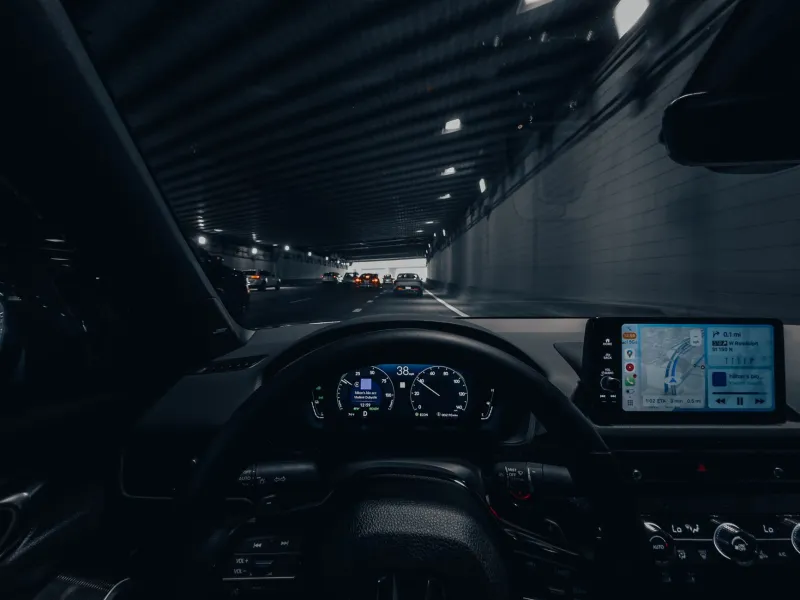
Somewhere on I-40 outside of Amarillo, a 43-year-old project manager named Derek told his car something he hadn't been able to say out loud in three years. Not to his wife. Not to his best friend. Not to the therapist he'd seen twice before quietly quitting. He told his '09 Silverado that he was scared. Really, genuinely scared — about his dad's health, about money, about whether he'd made the right choices with his life.
"I don't know why it came out there," he said, laughing a little uncomfortably when he told me the story. "I was alone, it was like nine at night, and I just... started talking. The truck didn't judge me. It just kept going."
Derek isn't unusual. He's just honest about something a lot of drivers quietly understand: the car has become America's most accessible confessional.
The Original Private Space
Think about how few truly private spaces most of us actually have. Our homes are shared. Our phones are tracked. Our offices have thin walls and open floor plans. Even our bedrooms feel like they belong to someone else half the time.
But the car? That's yours. Especially when you're moving.
There's a reason so many people describe driving alone as the only time they genuinely feel like themselves. It's not just the solitude — it's the combination of motion, containment, and anonymity that creates something psychologists describe as a "transitional space." You're not at work. You're not home. You're in between, suspended in a kind of social nowhere-land where the normal rules about composure don't quite apply.
Dr. Renata Osei, a licensed clinical psychologist based in Atlanta who studies behavior and environment, puts it plainly: "The car removes social consequence. You can say anything. You can cry. You can scream. You can rehearse difficult conversations or revisit painful ones, and there's no one there to react. That absence of reaction is actually incredibly freeing for a lot of people."
What People Actually Say
When you start asking drivers what they tell their cars, the answers come slowly at first — then all at once.
Marisa, a 31-year-old nurse from Phoenix, admits she gives herself pep talks every single morning on the way to her hospital shift. "I'll literally say out loud, 'You can do this. You're good at this. People need you today.' I would never say that stuff to myself in a mirror. That feels ridiculous. But in the car, driving, it feels real."
Then there's Calvin, a retired electrician from rural Tennessee who lost his wife two years ago. He still talks to her on his Sunday drives. "I tell her about the week. What happened with the grandkids. What I had for dinner. I know she's not there. I know it. But something about saying it out loud while I'm driving makes it feel like she can hear me somehow."
And plenty of people use the car for the less poetic stuff, too — the rants, the venting, the things they absolutely cannot say to a coworker's face. "I have full arguments in my car," laughs Priya, a marketing director in Chicago. "Complete with the other person's responses. I work through what I want to say, what they'll say back, how I'll respond. By the time I get to the office, I've already had the whole fight and I'm calm."
Why Movement Makes Us More Honest
There's actually science behind why motion unlocks something in us. Research in environmental psychology suggests that when the body is engaged in a repetitive physical task — like the subtle, constant micro-adjustments of driving — the brain's self-monitoring functions relax. We become less guarded. The inner critic quiets down just enough to let real thoughts bubble up.
It's similar to what happens when people talk more openly during side-by-side activities — think fishing, shooting hoops, or taking a walk — than they do face-to-face. Eye contact and direct confrontation trigger self-consciousness. Motion and parallel engagement lower those defenses.
"There's also something about the forward momentum," Dr. Osei adds. "Physically moving forward can psychologically reinforce a sense of progress, of moving through something. People often find it easier to process difficult emotions when they're literally in motion."
Add in the white noise of road and engine, the hypnotic quality of highway lines, and the total absence of anyone who might respond — and you've got conditions that are almost purpose-built for honesty.
The Steering Wheel as Witness
What strikes you when you talk to drivers about this is how non-judgmental they describe the car as being. Which is funny, because it's a machine. It has no opinion. But that's exactly the point.
"My car has heard things that would change how people see me," says Jerome, a 52-year-old high school football coach from outside Columbus, Ohio. "Doubts I have about coaching. Times I've been wrong and didn't want to admit it publicly. Stuff I'm embarrassed about. But the car just... holds it. It doesn't go anywhere."
There's something almost sacred about that. In a culture where everything gets screenshotted, shared, and archived, the car remains one of the last places where words can dissolve into the air without consequence. You can say the unsayable and then watch it disappear into the rearview mirror.
Some drivers have started thinking of it as a kind of ritual. A woman named Beth, a pastor in her fifties from rural Georgia, told me she prays in her car differently than she does anywhere else. "In church, I'm aware of people around me. In my car, it's just me and God. I say the real stuff there."
The Confessional on Wheels
Maybe what we're really talking about is a deeply human need for witness — not judgment, not advice, not even a response. Just the experience of saying something true out loud and having it heard by something, even if that something is a 2004 Camry with 180,000 miles and a cracked dashboard.
The car doesn't need you to have it together. It doesn't need you to be strong or professional or fine. It doesn't need anything from you at all. And in that total lack of need, it gives you something most people in your life — no matter how much they love you — simply can't: unconditional, wordless presence.
Derek, back on I-40, said he drove another forty miles after his confession that night. Didn't turn the radio on. Just let himself be in it.
"By the time I pulled into the hotel," he said, "I felt lighter. Like I'd put something down that I'd been carrying for a long time." He paused. "I thanked the truck when I got out. Out loud. I know that sounds crazy."
It doesn't sound crazy. Not even a little bit.
That's just what the road does. It listens.