Ghost Playlists: The Music You Made for a Drive You'll Never Take Again
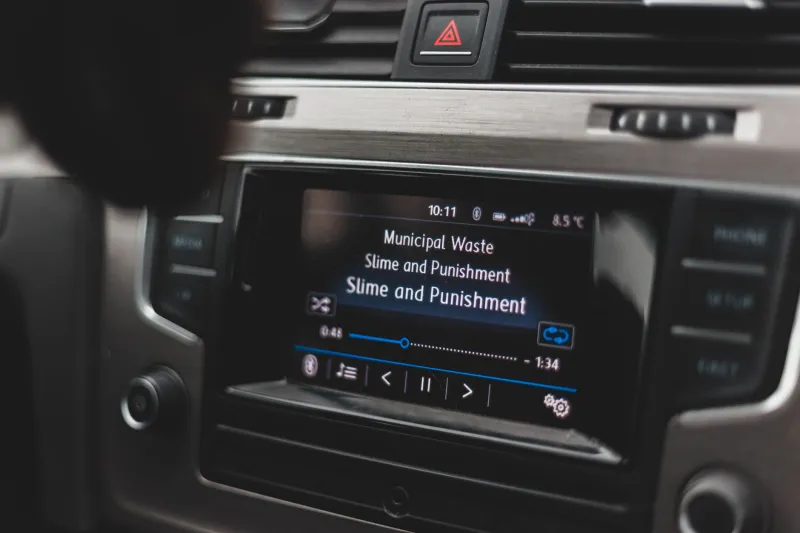
Scroll far enough down your Spotify library and you'll find them. Playlists with names like Late Drive Oct or Highway Mix 3 or just a string of emojis that made perfect sense at the time. You haven't touched them in months. Maybe years. But you can't bring yourself to delete them either.
There's something quietly haunting about a playlist built for a specific drive — a road you were on, a headspace you were in, a version of yourself that needed exactly those songs in exactly that order. The music felt right then. Inevitable, even. Now it just feels like someone else's memory.
So what happened?
The Drive That Demanded a Soundtrack
Every driver knows the feeling. You're heading out late, the roads are empty, and something in the air — maybe the temperature, maybe the particular shade of dark — tells you that whatever's on the radio isn't going to cut it. You need the playlist. You spend ten minutes building it in a parking lot before you even pull out, adding songs by instinct, trusting your gut in a way you rarely trust it anywhere else.
That playlist becomes inseparable from the drive itself. The opening track hits right as you merge onto the highway. A slower song drops in during the stretch where the city lights fade. By the time you're home, the whole thing feels less like a collection of songs and more like a score written for that specific night.
Psychologists who study music and emotion call this context-dependent memory — the idea that what we hear gets encoded alongside everything else we're experiencing at the time. The music doesn't just soundtrack the moment. It becomes the moment. Which explains why hearing a song from an old road trip can drop you back into the passenger seat of a car you no longer own, in a city you haven't visited in a decade.
But it also explains why that same playlist, played on a Tuesday afternoon in bumper-to-bumper traffic on I-405, sounds completely wrong.
Why Daylight Breaks the Spell
There's a reason so many of our best driving playlists were built after dark. Night driving changes the sensory equation in ways we don't fully appreciate until we try to replicate the experience in the daylight. The reduced visual input, the quiet roads, the particular solitude of being awake when most people aren't — all of it primes us for a certain kind of music. Atmospheric stuff. Songs with space in them. Tracks that reward a little introspection.
Put that same playlist on at noon on a Saturday with the sun hammering through the windshield and kids arguing in the backseat, and it doesn't just feel off. It feels almost embarrassing, like wearing a tuxedo to a cookout.
Our emotional state behind the wheel is one of the most dynamic things about us as drivers. We're not the same person on the way to work Monday morning as we are on a solo road trip through the Texas Hill Country. The music we reach for reflects that — and when the conditions that created a playlist no longer exist, the playlist stops making sense.
This is the paradox. The more perfectly tailored a driving soundtrack is to a specific moment, the less useful it becomes for any other moment. You optimized it right out of general applicability.
What Those Playlists Are Actually Telling You
Here's where it gets interesting. Go back and actually listen to one of those ghost playlists — not in the car, just sitting somewhere quiet. Don't skip around. Let it run.
What you'll notice is that the songs themselves form a kind of emotional arc. There's usually a mood at the beginning, a shift somewhere in the middle, and something that functions almost like a resolution at the end. You built a journey without necessarily realizing it. The drive was the vehicle (literally), but what you were actually mapping was an internal state.
That playlist from the cross-country move three years ago? It's not really about the drive from Chicago to Denver. It's about the anxiety of starting over and the strange, terrifying freedom that came with it. The one you made during that weird stretch last winter when you were putting in a lot of late miles and not sleeping great? That's not just ambient electronica and slow-burn indie rock. That's loneliness with a tempo.
Drivers have always used the road as a place to process things they can't sit still long enough to face anywhere else. Music is just the language we use to do it. Which means those forgotten playlists aren't really about the drives at all — they're documents of who we were and what we were carrying.
The Curator and the Moment
There's a certain type of driver — and you probably know one, or are one — who takes playlist curation seriously. Not in a pretentious way, just in the way that some people are particular about their coffee order or the route they take to a familiar destination. These are people who understand that the right song at the right moment can turn an ordinary stretch of interstate into something that feels genuinely cinematic.
But even the most dedicated curators will tell you: the playlist that absolutely slaps on a solo drive through the Mojave at dusk is going to feel weirdly melancholy on a Sunday morning run to the hardware store. Context is everything. The music doesn't change, but you do.
Maybe that's the actual lesson here. Not that we fail our playlists by outgrowing them, but that building them in the first place is an act of self-awareness most of us don't give ourselves credit for. You were paying attention to what you needed. You were honest about your emotional GPS, even if you couldn't have articulated it out loud.
Keep the Ghosts
Next time you're tempted to do a clean sweep of your streaming library, pause before you nuke those old playlists. They're not clutter. They're a record of every version of you that got behind the wheel and needed music to make sense of the road ahead.
The 2 AM desert run playlist. The one from the drive home after the breakup. The road trip mix you built with someone who isn't in your life anymore. The solo highway session where something finally clicked.
None of them are wrong. They're just finished.
And there's something kind of beautiful about that — the idea that the road asks different things of us at different times, and that somewhere in our playlists, we were already answering.