Never the Same Road Twice: Inside the Minds of America's Compulsive Route Changers
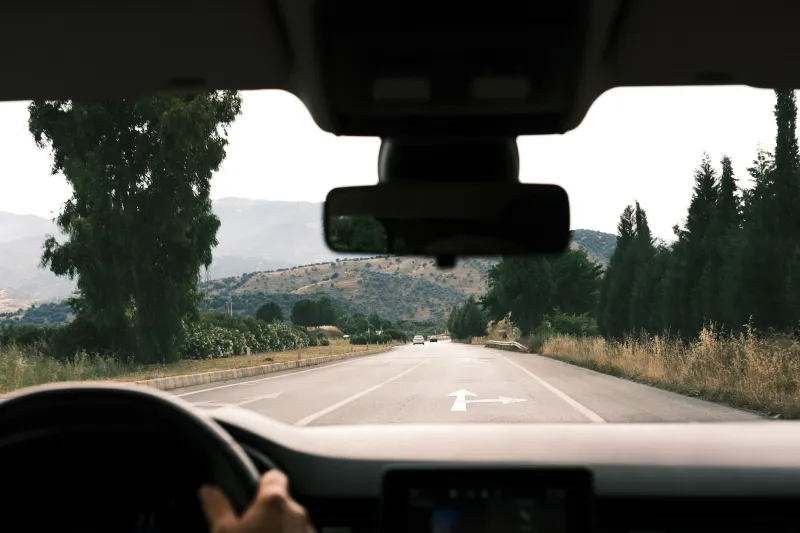
Marcus drives from his house in suburban Nashville to his office downtown every single weekday. It's a twelve-mile trip. In four years, he estimates he's taken the same route maybe three times — and two of those were because of a snowstorm that left him no choice.
"My wife thinks I'm crazy," he says, laughing. "She'll ask me how work was, and I'll say, 'Good, found this amazing little two-lane through Bellevue I'd never noticed before.' She just shakes her head."
Marcus isn't lost. He's not running late. He's not even particularly interested in cars, if we're being honest. What he is, he says, is alive — at least in a way he can't quite replicate sitting at a desk or watching Netflix after dinner.
He's not alone. Across the country, there's a quiet but passionate community of drivers who treat the road like an unfinished map — one they're personally responsible for completing. Call them route rebels, detour devotees, or just people who can't stomach the idea of doing the same thing twice. Whatever you call them, they're onto something the rest of us might be missing.
The Itch You Can't Scratch With a GPS
Here's the thing about navigation apps: they're optimized for efficiency. Fastest route, least traffic, fewest turns. They're solving a problem most of us didn't know we had — or maybe one we were too quick to hand over.
For compulsive route-changers, that efficiency is almost offensive.
"The whole point of driving isn't to get somewhere as fast as possible," says Deanna, a freelance photographer based in Portland, Oregon, who has made a personal rule never to use GPS unless she's heading to a completely unfamiliar city. "If I wanted that, I'd take a train. When I'm in my car, I want to feel like there's still something out there I haven't seen yet. And there always is."
Psychologists would recognize what Deanna and Marcus are describing as a variant of neophilia — a love of novelty — mixed with something called exploratory behavior, a deeply human drive that predates cars by about a hundred thousand years. We are, by nature, a species that wanders. The problem is that modern life has engineered almost all the wandering out of our daily routines. Same job, same grocery store, same Netflix queue.
The car, for some people, becomes the last frontier where genuine surprise is still on the table.
What You Find When You Stop Knowing Where You're Going
Ask any dedicated route-changer what they've discovered on a random Tuesday morning detour, and you'll get a list that sounds like a travel magazine: a roadside barbecue joint in rural Georgia that's been open since 1957. A covered bridge in rural Indiana that Google Maps doesn't even acknowledge. A stretch of highway in the Texas Hill Country where the bluebonnets hit so hard in April you have to pull over just to take it in.
These aren't bucket list items. They're accidents. Beautiful, unrepeatable accidents.
Troy, a long-haul trucker from Ohio who's been driving professionally for over two decades, has a slightly different take. His routes are often dictated by dispatchers and deadlines, but on his off days, he refuses to plan anything.
"I've driven through 48 states," he says. "And the stuff I remember most isn't the stuff I planned. It's the wrong turn I took outside of Albuquerque that led me to this mesa at sunset. It's the road in Montana that I just started following because it looked interesting. You can't manufacture that. You've got to let the road give it to you."
The Fear Underneath the Detour
But let's be real for a second — because not all of this is romantic wanderlust. Some of it is something more uncomfortable.
Several of the drivers we spoke with admitted, when pressed, that their compulsion to change routes isn't purely about discovery. It's also about avoiding a particular kind of dread: the dread of sameness. Of routine. Of a life that's begun to feel like it's running on autopilot.
"I think if I took the same route every day, I'd feel like I was just... going through the motions," says Janelle, a high school teacher from outside Atlanta. "Like I'd given up on something. I know that sounds dramatic for a commute, but it's true. The moment I stop looking for a different way to get somewhere, I feel like something inside me has gone a little flat."
There's a reason that resonates. The road has always been one of America's most reliable metaphors for freedom and self-determination. From Route 66 to Kerouac to every road movie ever made, we've tied the open road to the idea that we're still in motion — not just physically, but existentially. To drive the same road every day, for some people, is to admit that the adventure is over.
Changing the route, even slightly, is a small but stubborn act of resistance against that idea.
The Side Effect Nobody Talks About
Here's something interesting: drivers who regularly change their routes tend to develop an unusually detailed mental map of their region. Marcus can tell you about back roads through middle Tennessee that most locals have never heard of. Deanna knows which streets in Portland flood first in November and which neighborhoods have the best morning light for photography.
This isn't just trivia. It's a kind of spatial intelligence — an intimate relationship with place that you simply cannot develop if you're always following the blue line on your phone screen.
"I feel like I actually know where I live," Marcus says. "Not just the address. The whole thing. The weird little pockets of it. The parts that don't make the Instagram posts."
There's something quietly radical about that in 2024, when so much of our experience is filtered, curated, and pre-optimized. The route-changer is out here doing the analog version of life, one unexpected left turn at a time.
So What Are You Waiting For?
You don't have to become a full-on GPS-defying route rebel to take something from this. The next time you're heading somewhere familiar — the grocery store, your parents' house, that coffee shop you go to every Saturday — try going a different way. Not the fastest way. Not the way your phone tells you. Just... a different way.
See what's on the street two blocks over. Notice the neighborhood you've driven past the edge of a hundred times without ever actually entering. Give yourself ten extra minutes and spend them being slightly, deliberately lost.
You might find a barbecue joint that's been there since 1957. You might find nothing at all. But you'll arrive somewhere having actually paid attention to the trip — and that, as any compulsive route-changer will tell you, is kind of the whole point.
The road doesn't repeat itself. Maybe we shouldn't either.