Bought for Five Hundred Bucks: The People Rebuilding Junkers — and Themselves
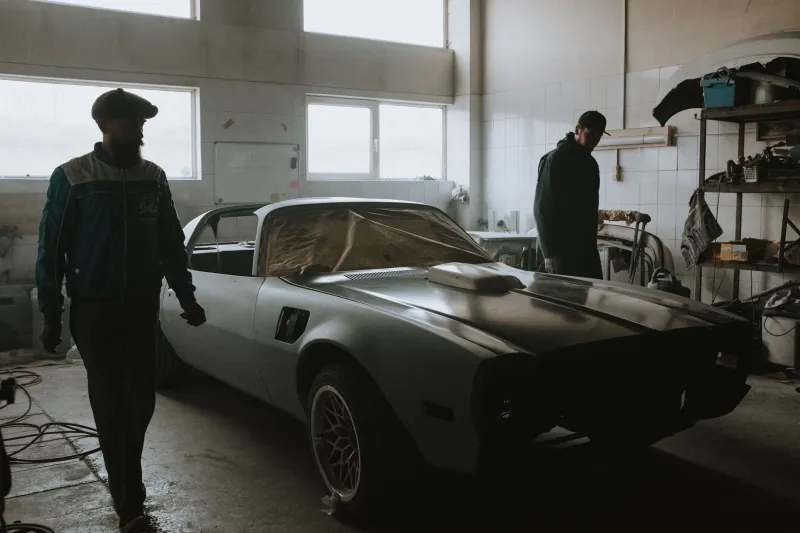
The 1987 Chevy Blazer had been sitting in a salvage yard outside Columbus for three years when Danny Okafor put in his bid. Surface rust covered most of the hood. Two windows were cracked. The engine turned over but barely. The auction house listed it as "as-is, no warranty, no guarantees." Danny paid $475 for it and had it towed to his rented driveway.
That was eighteen months ago. Today, the Blazer runs. Not perfectly — but it runs. And Danny will tell you, without hesitation, that restoring it was the most important thing he's done since his divorce.
"I needed something I could fix," he says simply. "Something where the problems were real and the solutions were real. I needed to work with my hands and see the result."
The Auction Floor as Starting Line
If you've never spent a Saturday morning scrolling through Copart or IAA auction listings, you might be surprised at what's out there. Flood-damaged sedans from Texas. Rear-ended pickup trucks from rural Pennsylvania. Hail-beaten SUVs from the Colorado plains. Most of these vehicles sell for a few hundred dollars — sometimes less — to buyers who are mostly dealerships, parts runners, and insurance companies.
But increasingly, a different kind of buyer is showing up in the bidding queues: regular people with no professional automotive background, a modest tool collection, and a YouTube education that rivals most trade schools. They're not chasing profit. They're chasing purpose.
Online communities dedicated to this kind of budget rebuilding have exploded in recent years. Forums, subreddits, and Facebook groups with names like "Cheap Junk Builds" and "Auction Rescue" have drawn hundreds of thousands of members who share parts sources, diagnose problems in comment threads, and celebrate each other's milestones with the enthusiasm of a pit crew.
"I'd never touched a car before I bought mine," says Priya Nair, a middle school teacher in Nashville who picked up a flood-damaged 2009 Honda Accord for $380. "I watched maybe 200 hours of YouTube videos. I asked so many dumb questions in forums. People were incredibly patient." Fourteen months later, Priya drives that Accord to work every day.
More Than a Mechanical Project
Talk to enough of these builders and a pattern emerges that has nothing to do with torque specs or wiring diagrams. A lot of them came to this hobby — if you can call it that — during a rough patch. Job loss. Grief. Burnout. The end of something that mattered.
There's a psychological logic to it that's hard to argue with. Rebuilding a car is, at its core, a series of solvable problems. The brakes don't work — you fix the brakes. The fuel pump is dead — you replace the fuel pump. Unlike the complicated, often unsolvable problems of adult life, the car gives you a clear feedback loop. You put in effort, you see results. In a world that can feel profoundly out of control, that's not a small thing.
Dr. Michelle Forsythe, a licensed counselor in Denver who works with adults navigating major life transitions, has noticed this dynamic in her clients. "There's something deeply grounding about working with your hands on a concrete problem," she says. "It engages the nervous system differently than screen-based activity. And completing something — even something small, like replacing a belt or fixing a light — gives people a genuine sense of agency that they may be lacking elsewhere in their lives."
Danny Okafor would recognize that description immediately. "Every time I fixed something on that Blazer, I felt a little more like myself," he says. "I know that sounds dramatic for a truck. But it's true."
The Community You Didn't Expect
One of the most consistent surprises people describe in this world is the community they stumble into. Automotive spaces have historically carried a gatekeeping reputation — the idea that you need to have grown up around cars, or apprenticed under someone, or at least know what you're doing before you're welcome.
The budget rebuild community operates differently. Because everyone starts from roughly the same place — broke, confused, and staring at a car that doesn't work — the hierarchy flattens considerably.
Terry Bowen, a retired postal worker in rural Georgia, started his $500 rebuild project — a 1994 Ford F-150 with a seized engine — after his wife passed away. "I needed to get out of the house," he says. "I needed to be doing something." What he didn't expect was that the project would connect him with a group of men in his county who were doing similar work. They started meeting on Saturday mornings. Sometimes they'd help each other. Mostly they'd just talk.
"That truck saved my life," Terry says. He pauses. "I know it sounds crazy."
It doesn't sound crazy at all.
What the Finished Car Represents
Not every $500 rebuild ends with a running vehicle. Some projects stall out. Some cars turn out to be more damaged than they appeared. Some builders run out of money, or time, or motivation. The auction floor doesn't come with guarantees.
But even the unfinished projects seem to leave something behind. A skill learned. A problem solved partway. A Saturday spent with grease on your hands instead of doom-scrolling. A conversation with a stranger online who turned into something like a friend.
Priya Nair, driving her resurrected Accord through Nashville traffic, puts it plainly: "I bought a broken car and fixed it. I didn't know I needed to do that until I did it. Now I can't imagine not having gone through it."
The car was $380. What she got out of it was worth considerably more.