Windows Down, Phones Away: American Families Are Hitting the Road Again — and Meaning It
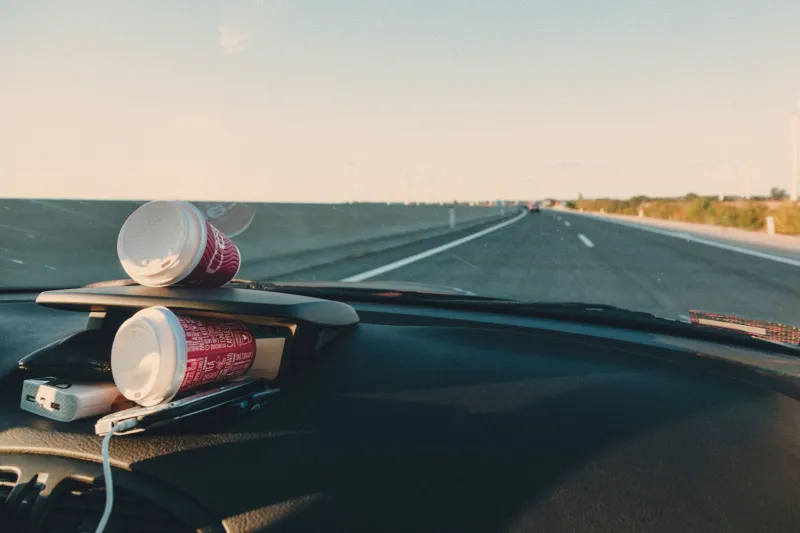
The Mercer family's first big road trip almost didn't happen. Beth and Craig had initially booked flights to Florida for spring break — same as every year. Then the fares spiked, the airline changed their layover, and Beth, half-joking, said: "What if we just drove?"
Thirty-six hours later, their 2019 Subaru Outback was packed with snacks, a playlist argument already in progress, and three kids who had no idea that this particular trip would become the one they'd talk about for years.
"We drove from Indianapolis to the Gulf Coast," Beth says. "We stopped at places we'd never have found on a flight. We ate at a diner in Tennessee that had a jukebox. My kids had never seen a jukebox. They were fascinated." She laughs. "It was a whole education."
The Numbers Tell the Story
The Mercers aren't an anomaly. According to data from AAA, road trips have accounted for a growing share of American family vacations in recent years, with multi-day driving trips seeing some of their strongest numbers since the early 2000s. Travel industry analysts point to a convergence of factors: rising airfare, a post-pandemic appetite for open-air travel, and a broader cultural fatigue with the frictionless-but-sterile experience of flying.
There's also the economics. A family of five flying round-trip to a popular destination can easily spend $2,500 or more on tickets alone — before hotels, rental cars, or anything else. That same family, loading up their own vehicle and driving, can stretch a vacation budget considerably further, with the added flexibility to change plans, linger somewhere unexpected, or simply pull over when something looks interesting.
But ask the families who've made the switch, and money is rarely the first thing they mention.
What Happens When You Can't Just Log Off
Screen fatigue is a phrase that gets thrown around a lot these days, often in ways that feel abstract. But spend a few hours in a car with your family — really present, moving through actual American landscape — and the abstraction becomes concrete pretty quickly.
"The first hour, everyone was on their phones," admits Craig Mercer. "Then the signal got spotty through the mountains and the phones became useless. And we started talking." He shakes his head slightly, as if still a little amazed by it. "Like, actually talking. About stuff that mattered."
This is something family therapists and child development researchers have been noting with interest. Dr. Sandra Chu, a family psychologist in Portland, Oregon, has observed that extended car travel creates what she calls "enforced togetherness" — a condition that sounds uncomfortable but often yields surprising results. "You can't retreat to separate rooms. You can't queue up different shows. You're sharing a physical space and a shared experience, and that proximity, over time, tends to generate real conversation and real connection."
The key phrase, she notes, is over time. "It doesn't happen in the first hour. It might not happen in the first three hours. But by the second day, families often find a rhythm together that they haven't experienced in years."
The Road as Curriculum
For many parents, the road trip revival is also about something they struggle to articulate but feel strongly: the sense that their kids are growing up in a world that is increasingly filtered, curated, and digital — and that exposure to the raw, unfiltered geography of America is itself a kind of education.
Driving through the Midwest and watching the landscape shift from cornfields to plains to mesa isn't something a travel documentary can replicate. Stopping for gas in a small town in West Texas and talking to the person behind the counter isn't an experience that fits in a highlight reel. These are the textures of the country — uneven, surprising, sometimes uncomfortable — that don't make it into the algorithm.
"I want my kids to know what America actually looks like," says Danielle Foster, a mom from Charlotte, North Carolina, who drove her family to Yellowstone last summer — a four-day trip each way. "Not just the parks and the landmarks, but the in-between parts. The parts that are just… real."
Her thirteen-year-old son, who'd complained loudly before departure about the length of the drive, spent most of the second day pressed against the window watching Wyoming scroll past. "He didn't say anything," Danielle says. "He just watched. I think it was the first time he'd seen something so big and so quiet."
Reclaiming the Ritual
There's a generational thread running through this story. Most parents who are rediscovering the road trip grew up taking them. The station wagon, the mixtape, the roadside motel with the questionable pool — these are memories that carry a specific kind of warmth, and there's something deliberate about the act of passing them on.
"My parents drove us everywhere," says Craig Mercer. "I remember hating it as a kid and then realizing, as an adult, how much it shaped me. How much I saw. How much time I spent just being with my family." He pauses. "I wanted that for my kids."
The road trip, at its best, isn't really about the destination. It's about the miles between. The argument over the music. The gas station that sells homemade jerky. The wrong turn that leads somewhere better. The moment, somewhere around hour six, when the conversation goes quiet and everyone is just watching the same road, going to the same place, together.
Beth Mercer's family has already booked their next trip: a two-week drive from Indianapolis up through Michigan's Upper Peninsula and across Wisconsin. The kids picked the route.
"They couldn't wait," she says. "That's how you know it worked."