Facing Forward: The Hidden Power of Conversations That Happen in Motion
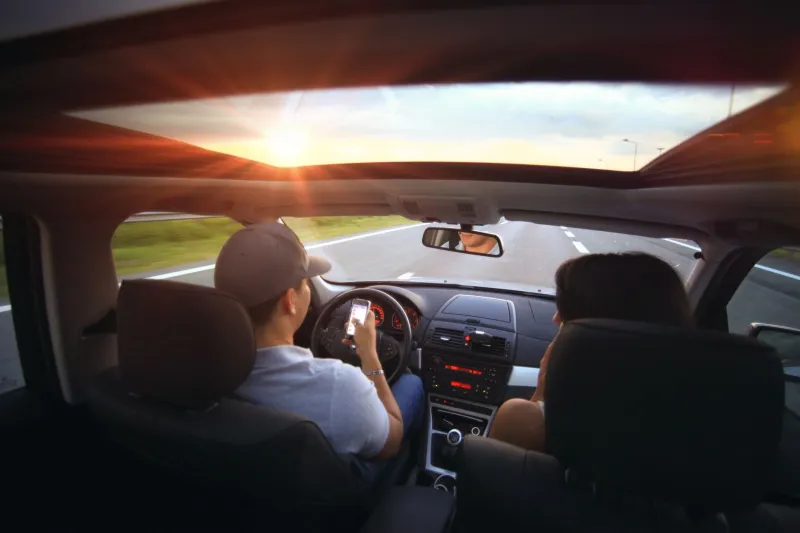
Laura Hendricks still remembers the exact stretch of highway where her teenage son told her he'd been struggling with anxiety for two years. Not at the dinner table. Not during one of the formal check-ins she'd carefully scheduled after reading a parenting book. It was on a Tuesday evening, somewhere between a grocery run and home, with the radio low and the streetlights strobing past the windows.
"He just started talking," she says. "I didn't look at him. I kept my eyes on the road. I think that's why it worked."
She's not alone in that observation — not by a long shot.
Why the Car Changes Everything
There's a reason therapists sometimes refer to side-by-side seating as a low-threat configuration. When two people sit facing the same direction, the psychological pressure of direct eye contact disappears. The conversation stops feeling like an interrogation and starts feeling like something shared — two people moving through the world together rather than across from each other.
Dr. Renee Castillo, a child and adolescent psychologist based in Austin, Texas, has been paying attention to this phenomenon for years. "The car removes so many of the social cues that make kids clam up," she explains. "There's no way to storm off. There's no table to stare at. The environment is contained but not confrontational. Kids feel like they're not being watched, even though they're sitting three feet away."
Add in the ambient noise — the hum of the engine, the rhythm of passing cars — and you get something close to a sensory buffer. It's just enough white noise to take the edge off a hard topic.
For younger kids, the effect is even more pronounced. A nine-year-old who'd go silent at the mention of school drama will often narrate the whole situation, unprompted, while watching telephone poles blur past the window. Something about being in motion seems to put the brain at ease.
The Commute as Connection
For parents who drive their kids to school, practice, or weekend activities, those short windows of time are proving to be surprisingly fertile ground. Not for big, planned conversations — but for the small, unguarded ones that end up mattering most.
Marcos Delgado, a father of three in suburban Chicago, started calling the morning school run his "fifteen minutes" a few years back. "I stopped trying to make it productive," he says. "No lectures about homework, no asking about grades. I'd just drive and see what happened." What happened, eventually, was that his middle daughter started telling him things she'd never brought up at home. A falling-out with a friend. Nerves about a presentation. A crush she was embarrassed about.
"She talked because I wasn't trying to get her to talk," Marcos says. "The car made it easier for both of us."
Dr. Castillo points out that this dynamic has a name in psychological circles — the concept of "parallel play" translated into conversation. Just as young children often play more comfortably alongside each other than in direct interaction, people of all ages sometimes connect more easily when they're engaged in a shared activity, like, say, riding somewhere together.
What Adults Remember
Ask grown children about pivotal conversations with their parents, and a striking number of them happen in cars. Not at the kitchen table. Not during holidays. In a moving vehicle, on some otherwise forgettable errand.
Jessica Park, now 34, can describe in precise detail a drive her father took her on after her parents announced their separation. She was twelve. He didn't explain much — just asked if she wanted to get ice cream and then drove the long way. "He didn't have answers," she says. "But he was there. We were moving. It felt like we were doing something, even though we were just driving around."
That sense of forward motion — literal and emotional — is part of what makes the car such a uniquely human space. You're going somewhere. Even when the conversation is hard, the road keeps moving. There's an implicit message in that: this isn't the end. We're still going.
The Accidental Therapy Room
None of this is lost on therapists who work with families. Some have even begun incorporating drive-along sessions — or at least the concept — into their recommendations. "I'll sometimes suggest that a parent take their kid for a drive with no agenda," Dr. Castillo says. "Not to talk about anything specific. Just to be together in motion. The conversations that come out of those drives are often more meaningful than anything we work through in a session."
Of course, the car isn't a cure-all. It doesn't replace genuine presence, real listening, or the kind of sustained attention that kids need from the adults in their lives. But it does remove some of the friction that makes those things hard.
Maybe that's the deeper lesson here. The car doesn't create connection — it just clears the path for it. It strips away the performance of conversation. Nobody's sitting up straight at a dinner table. Nobody's waiting for the right moment. You're just driving, and the miles pass, and somewhere in all that forward motion, something honest finds its way out.
Laura Hendricks still takes the long way home sometimes. Not always. But when she senses her son has something on his mind — something he hasn't figured out how to say yet — she'll find a reason to stay on the road a little longer.
"He knows what I'm doing," she laughs. "I think he lets me."
And that, maybe, is the whole point.