Shotgun Confessions: The Surprising Things We Learn From the People Riding Beside Us
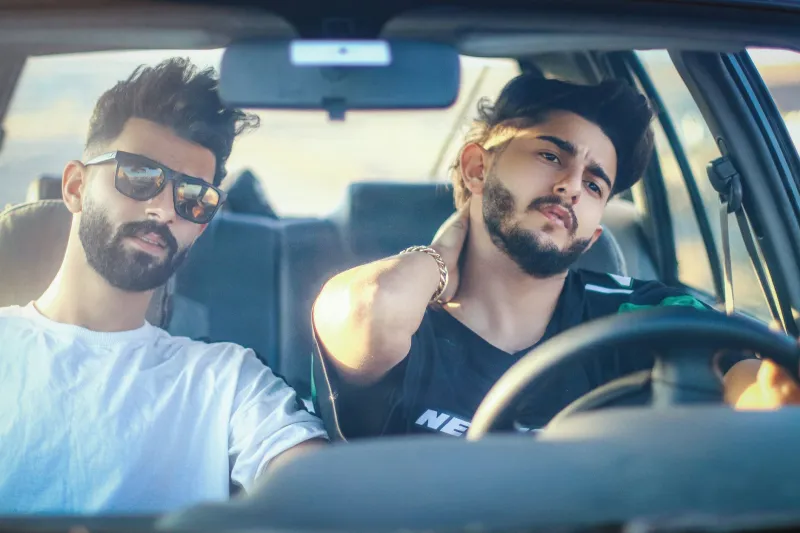
Ask most drivers about their car and they'll tell you about the engine, the mileage, maybe the sound system. Ask them about the most important moment they ever had in that car, though, and nine times out of ten it involves another person — sitting right there in the seat next to them.
There's a reason we call it the passenger seat and not just "the other seat." It implies relationship. Proximity. A kind of chosen closeness that you don't really find anywhere else in daily American life. You're both facing forward. You can't fully look at each other. And yet somehow, the conversations that happen in that space go deeper than almost anything that unfolds across a dinner table or a living room couch.
We talked to drivers all across the country about their most unforgettable passengers — and what those rides ended up teaching them about themselves.
The Car as Confessional
Marcus, a 41-year-old contractor from Columbus, Ohio, remembers the exact stretch of I-71 where his teenage son told him he was struggling in school. Not failing — struggling. Emotionally. The kind of thing a kid doesn't say to your face while you're making eye contact over homework.
"We were just driving back from a hardware store," Marcus said. "He started talking and I kept my eyes on the road. I think that's what made it possible. Neither of us had to look at the other one."
That dynamic — side by side rather than face to face — is something therapists and researchers have actually noted for years. There's less social pressure in a moving vehicle. Eye contact, which carries enormous social weight, is off the table. The engine hum fills the silence so it never feels awkward. And the temporary nature of a car ride creates a kind of safe container: whatever gets said here ends when we park.
For Marcus, that drive changed how he talked to his son. "I started inventing reasons to take him places after that. Just the two of us. The car became the place we actually talked."
What Your Passenger Seat Says About You
Here's the thing most drivers don't consciously think about: who you invite into your car, and how you treat them once they're in it, says a lot about who you are.
Do you clear the seat before someone gets in, or do you make them hold your gym bag? Do you ask what music they want, or do you assume they'll appreciate your taste? Do you narrate your driving — explaining every lane change, every shortcut — or do you let the silence breathe?
Rachel, a 34-year-old nurse from Austin, Texas, said she once dated a guy for three months before realizing, during a road trip to San Antonio, that he never once asked if she was comfortable. "He controlled the temperature, the music, the route. He talked the whole time about himself. And I just sat there thinking — oh. This is who he is."
She laughs about it now. "The car doesn't lie. You can fake a lot of things on a date. You cannot fake how you drive with someone in the car."
There's a version of this that goes the other way, too. Some drivers become their best selves behind the wheel — more patient, more present, more willing to listen. The act of driving seems to quiet something in them.
The Unexpected Classroom
Not every passenger is someone you chose. Sometimes the most instructive rides involve strangers.
Derek, who drove for a rideshare company in Chicago for about two years before going back to full-time construction work, says the passenger seat taught him more about human nature than anything else in his life.
"You get every kind of person," he said. "People who are terrified and trying not to show it. People who've just gotten news — good or bad — and they need to tell someone. People who are completely alone in the world and they just want five minutes where someone is taking care of them, getting them where they need to go."
Derek started keeping a mental journal of the rides that stayed with him. The woman who cried quietly the entire way to O'Hare and thanked him like he'd done something extraordinary. The teenager who asked him if he thought it was too late to change your life at seventeen. The elderly man who wanted to talk about his wife, who had died six months earlier, because he still wasn't used to riding alone.
"I stopped thinking of it as driving people around," Derek said. "I started thinking of it as being trusted with something."
The Mirror You Didn't Know Was There
Maybe the most honest thing about the passenger seat is what it reflects back at you when it's empty.
Several drivers we spoke with mentioned the same strange phenomenon: the absence of a regular passenger — after a breakup, after a child leaves for college, after a friend moves away — changes how a car feels in a way that's hard to explain.
Jennifer, a 52-year-old teacher from Portland, Oregon, said that after her youngest left for college, she drove to work for the first time in eighteen years without dropping anyone off. "I sat at a red light and I just started crying. The seat was right there. Empty. It hit me that I'd spent two decades being a driver for other people, and I hadn't really thought about what I was going to be now."
She eventually started a monthly road trip tradition with a different friend each time. The passenger seat, she decided, was too important to leave vacant.
"It's not just transportation," she said. "It's an invitation. You're saying, come with me. I'll get us there."
The Ride Worth Taking
There's a version of automotive culture that's entirely about the machine — the torque, the trim level, the 0-to-60. And look, that stuff is genuinely fun. Nobody here is arguing otherwise.
But if you've been driving long enough, you already know that the rides you remember most aren't usually about the car. They're about who was in it.
The passenger seat is where your kid told you the hard thing. Where your best friend made you laugh so hard you had to pull over. Where a stranger reminded you that people are mostly just trying to get somewhere and hoping someone will help them do it.
What drives you isn't always the road ahead. Sometimes it's the person riding beside you — and what they quietly, undeniably show you about who you are.