Throw Away the Route: Why the Best Drivers Are Learning to Get Lost Again
Marcus Webb remembers the exact moment he decided to stop following directions.
He was somewhere outside of Knoxville, Tennessee, watching the blue line on his phone recalculate for the fourth time, the robotic voice telling him to make a legal U-turn in 300 feet. He'd taken the same interstate corridor from Nashville to Asheville that he'd taken a dozen times before. Efficient. Predictable. Completely forgettable.
"I looked around and realized I couldn't tell you a single thing I'd seen in the last two hours," he said. "I'd just been following instructions. I wasn't even really driving."
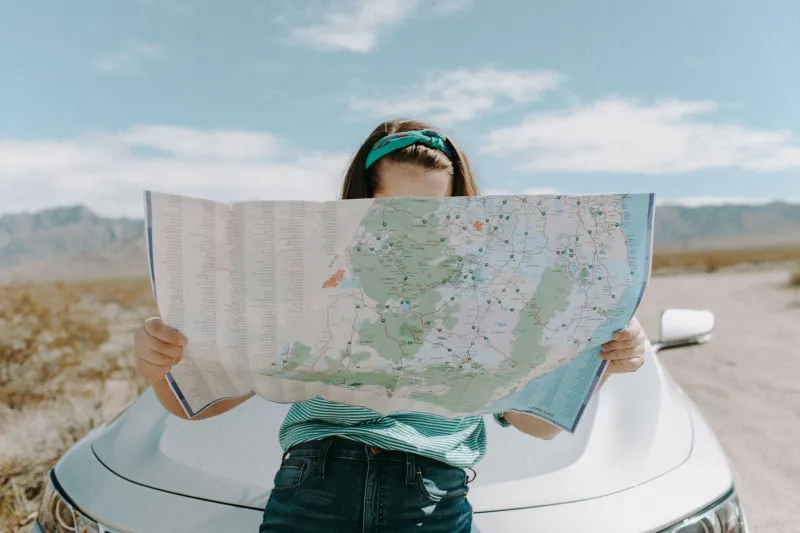
He pulled into a gas station, stuck his phone in the glove box, bought a paper map from a rack near the register—the attendant seemed genuinely surprised anyone still wanted one—and turned down a two-lane road heading east toward the mountains with no particular plan.
That was two years ago. He hasn't used GPS on a road trip since.
The Algorithm Ate the Adventure
Here's the thing about navigation apps: they're extraordinary at their job. They'll get you there faster, route around traffic, warn you about speed traps, and optimize your fuel stops. They've genuinely made driving more efficient for millions of Americans.
But efficiency and experience aren't the same thing.
When every route is pre-optimized, when every detour is automatically corrected, when the app is always quietly steering you back toward the fastest path—you stop making choices. You stop noticing. The road becomes a loading screen between Point A and Point B, and you arrive at your destination having consumed the miles without actually tasting them.
There's a growing contingent of drivers who've figured this out and are doing something about it. They're calling it different things—intentional wandering, analog driving, slow travel—but the core idea is the same: put down the phone, pick up a general direction, and see what happens.
What Surrender Actually Feels Like
The first hour is the hardest. Almost everyone who's tried deliberate GPS-free driving describes the same initial wave of low-grade anxiety. What if there's traffic? What if this road dead-ends? What if I miss something important?
That anxiety is, it turns out, kind of the point.
When you're navigating by instinct and observation rather than instruction, your brain actually switches gears. You start reading the landscape. You notice which way the mountains are. You pay attention to the sun. You read road signs the way people used to read them—as information, not confirmation of what the app already told you. You become, in a very real sense, more present in the car.
Jenna Kowalski, a landscape photographer from Portland, Oregon, started leaving her GPS home on weekend drives about three years ago after a mentor suggested she try shooting locations she hadn't researched in advance. "I was so used to going to the spots I'd already seen on Instagram," she said. "When I started just driving and stopping when something caught my eye, I found places I never would have found otherwise. A flooded road that turned into this incredible reflection. A barn that was being demolished—I got there on literally the last day."
She now drives without navigation on every personal trip under six hours. "I've gotten lost plenty of times. I've also found things that changed my whole photography."
The Small Towns You'll Never Find on the Fast Route
Interstates were built to move people efficiently past places, not through them. The blue highways—the old US routes and state roads that predate the highway system—were built to move people among places. There's a difference, and you feel it the moment you exit the freeway and drop down into the grid of a small American town.
The diner that's been open since 1958. The hardware store where the owner knows every customer by name. The roadside fruit stand staffed by someone's grandmother. The courthouse square that still has a functioning clock tower.
These places exist in enormous numbers across this country. They just don't show up in the suggested route.
Dave and Carol Hutchins, a retired couple from suburban Chicago, have been doing what they call "blue highway summers" for the past five years. They pick a general destination—the Gulf Coast, the Ozarks, the Finger Lakes—and then refuse any route that involves more than twenty consecutive miles of interstate. "We've eaten the best pie of our lives in places we can't remember the names of," Dave said. "That's not a problem. That's kind of the whole thing."
Navigation as Mindfulness
There's a reason this particular form of driving appeals to people who also gravitate toward meditation, journaling, or other intentional practices. Getting lost on purpose requires you to be fully in the moment. You can't zone out when you're the one making every decision. You can't be somewhere else mentally when you're genuinely uncertain where you are physically.
The open road has always offered a version of this—the rhythmic freedom of forward motion, the way distance creates perspective. But GPS quietly dismantled some of that. When the route is handled, the mind wanders elsewhere. Emails. Anxieties. The noise that never really stops.
Take away the route, and the road demands your attention again. It's a trade that more and more drivers are deciding is worth it.
How to Start
You don't have to throw your phone into a river. The entry point for most people is modest: pick one weekend drive and navigate it without apps. Use a printed map, or just pick a compass direction and commit to it for an hour. Give yourself permission to end up somewhere unexpected.
Bring more time than you think you need. That's the other non-negotiable. Intentional wandering doesn't work if you're watching the clock. The detour only becomes destiny if you're actually willing to take it.
Marcus Webb, back on that mountain road outside of Knoxville two years ago, ended up in a small North Carolina town he'd never heard of, at a barbecue joint that had been smoking pork since 1971. He sat on a picnic bench for two hours talking to a retired firefighter about—of all things—vintage muscle cars. He has no idea what the town was called. He's never been able to find the restaurant online.
He says it's one of his favorite memories.
"You can't plan for that," he said. "The algorithm definitely can't plan for that. You just have to be willing to not know where you're going for a little while."
Most of the best drives work exactly that way.